
Software Stocks, AI Fears, and the Search for a Bottom


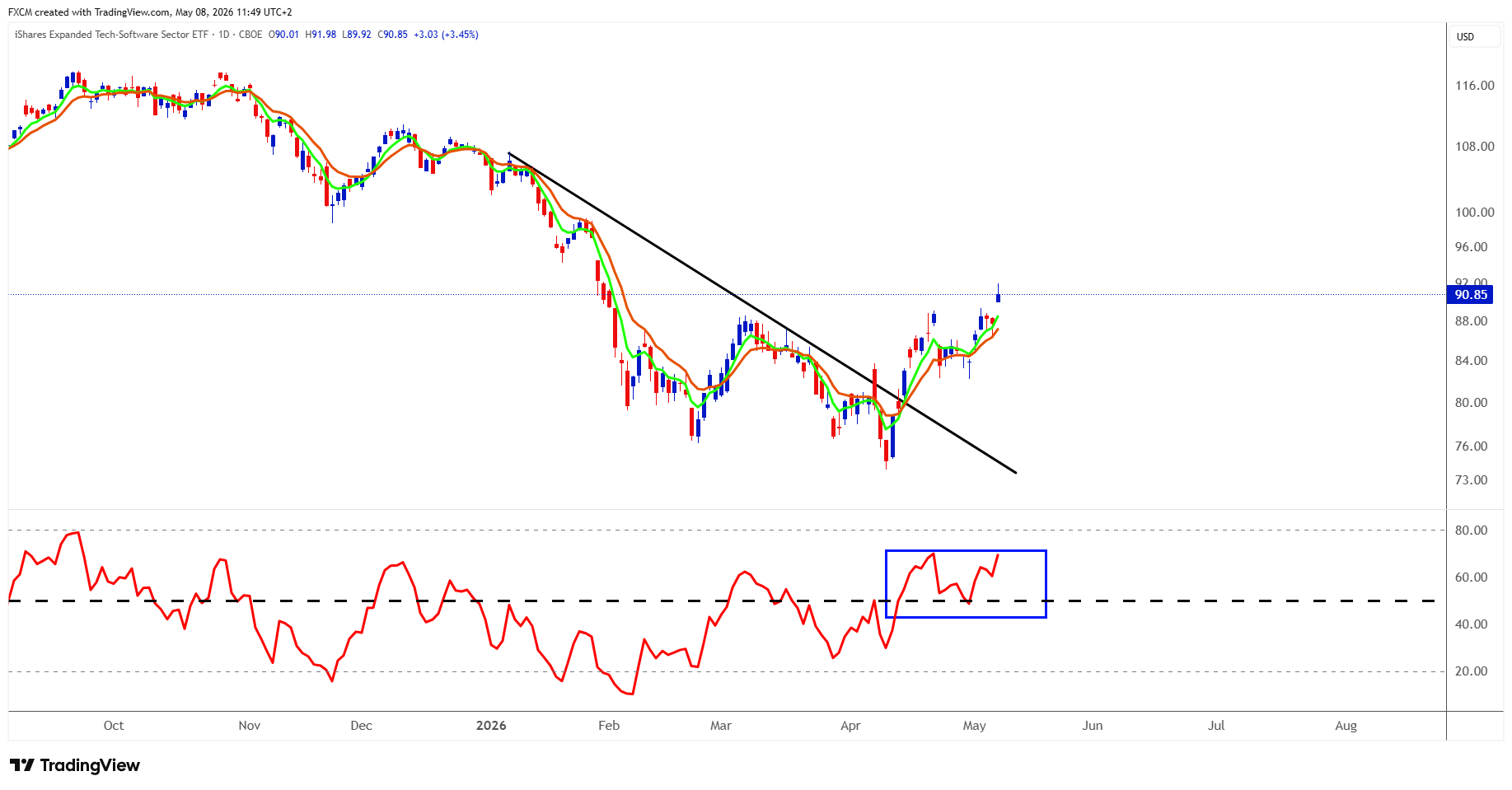
It's been a rough and volatile start to 2026 for software stocks. For a while, the narrative flipped hard. Instead of AI being a boost to the sector, investors started treating it as an existential threat. The concern was simple: if AI can write code, automate workflows, and replace parts of what software platforms do, then why keep paying for those platforms?
That shift in thinking hit the sector hard. The iShares Expanded Tech-Software Sector ETF (IGV) sold off sharply as money rotated into semiconductors, which were seen as the clearer winners of the AI boom.
At the height of the panic, people even started calling it a "SaaSpocalypse." The logic was blunt but compelling. If AI eats into what software companies offer, their growth and margins could come under pressure. And given how richly valued many of these businesses were, it didn't take much to trigger a meaningful correction. The result was steep, widespread declines across the space.
But markets rarely stay one-sided for long, especially when everyone starts believing the same story. Over the past few weeks, software stocks have begun to stabilise. IGV has bounced off its lows, and while it may be too early to call a definitive bottom, sentiment has clearly improved. Investors are starting to question whether the AI threat was overstated.
From Threat to Opportunity
A big part of that shift has come from earnings. Instead of confirming the worst fears, a number of software companies have shown that AI might actually be a tailwind.
Take Datadog. Its recent results beat expectations, and management pointed directly to AI-related demand as a key growth driver. That helped lift the broader sector and challenged the idea that AI would simply replace software companies.
Other names like Atlassian, Twilio, and Five9 told a similar story. Rather than losing relevance, they're finding ways to build AI into their products. Atlassian, in particular, highlighted strong traction from AI-powered features, suggesting that companies that adapt well could come out stronger on the other side.
Cybersecurity has been another area reinforcing this shift. Firms like Palo Alto Networks, CrowdStrike, and Fortinet have rallied as investors rethink the role of AI. If anything, more sophisticated AI-driven threats could increase demand for advanced security solutions.
The broader point is this: the relationship between AI and software isn't as straightforward as "one replaces the other." Businesses still need systems for integration, compliance, workflow management, and security. In many cases, software companies are best placed to embed AI into tools that customers already depend on.
Valuations and Positioning
Valuation has also played a role in the rebound. By April, software had become one of the most beaten-up parts of the market. At some point, investors started to argue that too much bad news had already been priced in, especially given that many companies were still delivering solid earnings and cash flow.
There's also a growing recognition that the earlier fears may have gone too far. High-quality software businesses still have durable advantages: strong customer relationships, valuable data, and deeply embedded infrastructure. Those are not easy to displace, even with rapid advances in AI.
On top of that, technical factors have helped. The sector has seen one of its strongest rebounds in years, and IGV has started to recover after a long stretch of underperformance. That kind of strength often signals that positioning had become too bearish.
That said, it's not all clear sailing. Some of the recent move could simply be a bounce from oversold levels rather than the start of a sustained recovery. The earlier damage was significant, and macro risks haven't gone away.
Evolving, Not Disappearing
The key takeaway is that the narrative is becoming more balanced. The idea that "AI kills software" is giving way to something more nuanced.
Yes, some companies will struggle, especially those with weaker products or limited differentiation. But others are already proving they can adapt, using AI to enhance their offerings and deepen their competitive edge.
The recent rebound in IGV doesn't guarantee the sector has bottomed. But it does suggest that investors are starting to see software not as a casualty of AI, but as an active participant in its next phase.
In that sense, the selloff may not have been about the end of software. It may simply have been the market's first attempt to price in a major shift in how the sector evolves.

Russell Shor
Senior Market Strategist
Russell Shor is a Senior Market Strategist at FXCM, having been promoted to the role in 2025 in recognition of his depth of insight and consistent delivery of high-impact market analysis. He originally joined FXCM in October 2017 as a Senior Market Specialist.
Russell holds an Honours Degree in Economics from the University of South Africa, is a certified FMVA®, and a full member of the Society of Technical Analysts (UK). With over 20 years of experience in financial markets, his work is renowned for its clarity, precision, and strategic value across asset classes.
These materials constitute marketing communication and do not take into consideration your personal circumstances, investment experience or current financial situation. The content is provided as general market commentary and should not be construed as containing any type of investment advice, investment recommendation and/or a solicitation for any investment transactions. This market communication does not imply or impose an obligation on you to perform an investment transaction and/or purchase investment products or services. These materials have not been prepared in accordance with legal requirements designed to promote the independence of investment research and are not subject to any prohibition on dealing ahead of the dissemination of investment research.
FXCM, and any of its Affiliates, shall not in any way be liable to you for any inaccuracies, errors or omissions, regardless of cause, in the content of these materials, or for any damages (whether direct or indirect) which may arise from the use of such materials, services and their content. Consequently, any person acting on them does so entirely at their own risk. Please ensure that you read and understand our Full Disclaimer and Liability provision concerning the foregoing Information, which can be accessed here.