
Gold subdued as the US dollar outshines it


XAU/USD analysis
The Middle East conflict has entered its third week with little sign of a let-up, as both sides maintain a defiant stance. Military operations have also intensified macroeconomic uncertainty, causing energy supply disruptions that spark a spike in oil prices and complicate monetary policy amid a wave of central bank decisions this week.
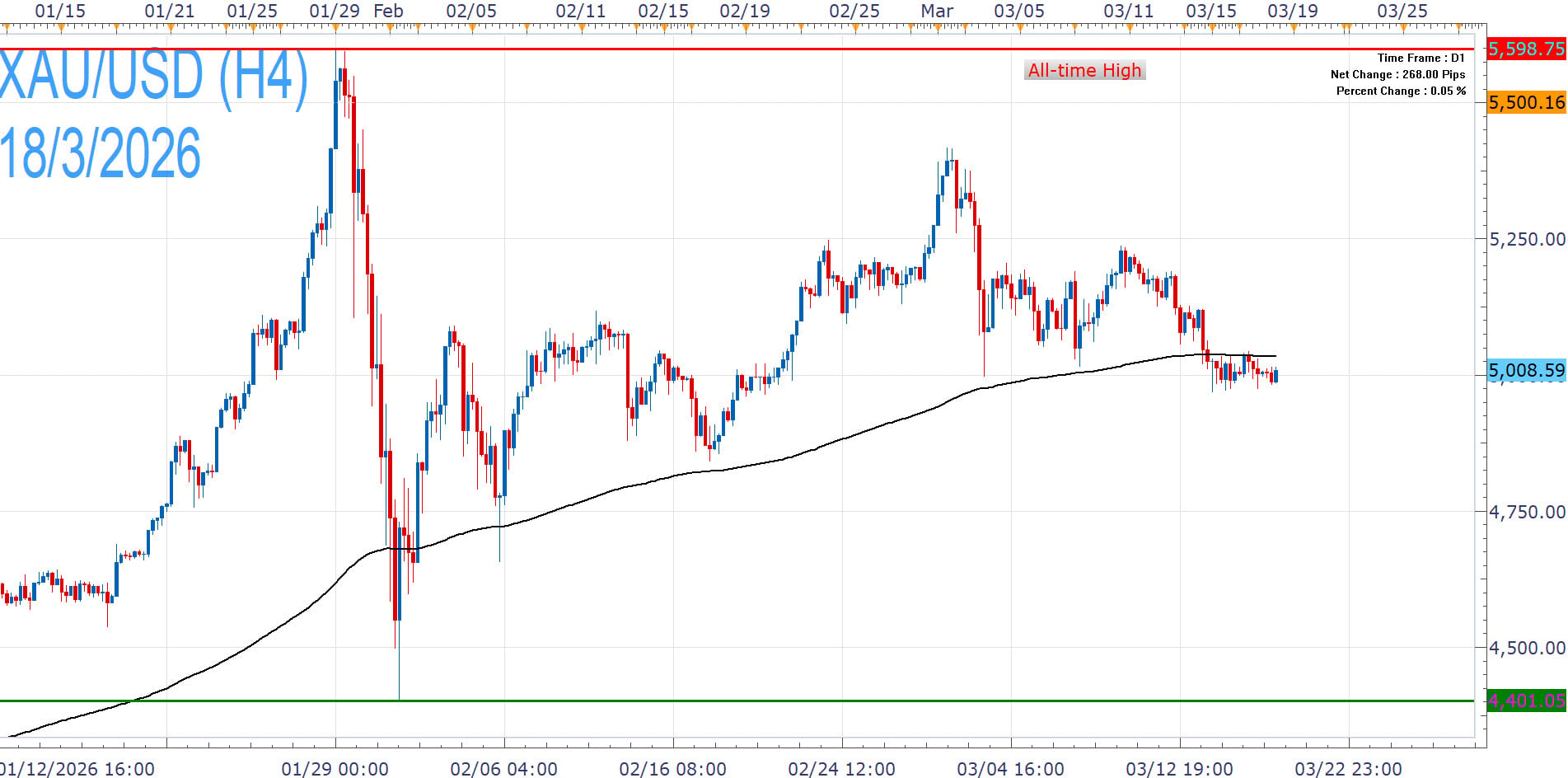
Despite an initial rise at the onset of the strikes, gold has failed to benefit from heightened geopolitical and economic uncertainty. This is largely due to the USDOLLAR emerging as the safe haven of choice during this turbulent period. Greenback strength and bullion's underperformance are compounded by a hawkish repricing of Fed rate cut expectations, as inflationary risks from higher energy prices could make additional easing harder.
As a result, XAU/USD dropped during the last two weeks and the breach of the EMA200 challenges the bullish outlook, leaving it vulnerable to deeper pullbacks toward 4,500. Nonetheless, gold tries to stabilise this week. Structural demand drivers remain intact and the greenback could face renewed pressure, keeping the road open to new XAU/USD record highs.
The USDOLLAR shed 4% in 2025 and remains down this year, falling victim to disruptive trade policies, macroeconomic uncertainty, Fed independence fears and fiscal concerns. None of those factors have gone away and a prolonged conflict could play into these fears and accelerate diversification and currency debasement trends.
Gold is the key beneficiary of such trends and could rise again should the dollar pull back. Furthermore, the Fed could look through a potentially temporary energy shock and the next chair may be more attuned to President Trump's preference for lower borrowing costs. This could lead to additional easing, a headwind for the greenback and a tailwind for non-yielding assets like gold.

Nikos Tzabouras
Senior Financial Editorial Writer
Nikos Tzabouras is a graduate of the Department of International & European Economic Studies at the Athens University of Economics and Business. With extensive experience in market analysis and a strong foundation in international relations, he brings a unique perspective to financial markets. Nikos emphasizes not only technical analysis but also on fundamentals and the growing influence of geopolitics on financial trends.
As a Senior Financial Editorial Writer, he delivers comprehensive and forward-looking insights across a wide range of asset classes, including equities, commodities, and currencies. His work explores how macroeconomic events, political developments, and global policies impact market dynamics, providing readers with a deeper understanding of both short-term movements and long-term trends.



Any opinions, news, research, analyses, prices, other information, or links to third-party sites contained on this website are provided on an "as-is" basis, as general market commentary and do not constitute investment advice. The market commentary has not been prepared in accordance with legal requirements designed to promote the independence of investment research, and it is therefore not subject to any prohibition on dealing ahead of dissemination. Although this commentary is not produced by an independent source, Friedberg Direct, FXCM or its affiliates takes all sufficient steps to eliminate or prevent any conflicts of interests arising out of the production and dissemination of this communication. The employees of Friedberg Direct and FXCM commit to acting in the clients' best interests and represent their views without misleading, deceiving, or otherwise impairing the clients' ability to make informed investment decisions. For more information about the Friedberg Direct's internal organizational and administrative arrangements for the prevention of conflicts, please refer to the Firms' Managing Conflicts Policy. Please ensure that you read and understand our Full Disclaimer and Liability provision concerning the foregoing Information, which can be accessed here.**