
Major central bank decisions clouded by Iran-driven stagflation risks


Iran conflict impacts energy supply and prices
The US-Israel strikes against Iran are now in their second week, with markets grappling with the prospect of a prolonged campaign. President Trump has demanded unconditional surrender, while Iranian officials have dismissed reports of negotiation efforts. Iran's new Supreme Leader is seen as a hardliner, further dimming hopes of a swift resolution.
The conflict is disrupting energy flows and driving a surge in prices, with crude oil briefly spiking above $100 per barrel, its highest level in nearly four years. The Strait of Hormuz remains effectively shut, the main transit route for Persian Gulf crude accounting for around 20% of global petroleum liquids consumption, according to the EIA [1]. Oil tanker attacks, strikes on Tehran fuel storage facilities and production cuts from regional producers like Kuwait are compounding the disruption.
That said, several factors could limit the damage. President Trump, mindful of reflationary risks and their threat to his cost-of-living agenda, has hinted the strikes could end "very soon" [2]. Tehran may also grow more willing to negotiate. A well-supplied global oil market may absorb short-term disruptions, prices are already retreating from their peak, and a lifting of sanctions and release of strategic reserves could offer near-term relief.
Stagflation risks complicate central bank rate decisions
Central banks were already navigating a complex and uneven policy landscape, with tariff uncertainty weighing on growth outlooks and inflation proving stickier than expected in some economies. The energy shock from the Iran conflict adds a dangerous new layer, raising the spectre of stagflation, that toxic and notoriously difficult combination of slowing growth and rising inflation.
Stagflation is particularly challenging for central banks because the two problems it presents pull policy in opposite directions. Slowing growth calls for rate cuts to stimulate the economy; rising inflation demands tightening to keep prices in check. Caught between the two, policymakers risk either entrenching inflation or tipping their economies into deeper downturns.
For now, the immediate concern is upward pressure on inflation. If energy prices remain elevated, central banks may feel compelled to move toward tighter policy. Yet policymakers will also be wary of overreacting to what could prove a temporary supply shock, and are likely to strike a cautious, data-dependent tone.
Against this backdrop, seven major central banks announce their rate decisions next week, each with their own constraints and none with an easy path forward.
Reserve Bank of Australia – Tuesday 17 March
The Australian central bank pivoted to a 0.25% interest rate increase last month and its updated economic projections point to additional tightening, as they rely on a higher implied rate path. The economy shows resilience, unemployment is relatively low and inflation remains elevated.
The Iran conflict vindicates the RBA's shift and creates scope for another hike on Tuesday. Higher energy and commodity prices could exacerbate inflationary pressure. Furthermore, the economy stands to benefit given Australia's LNG, gold, coal and other exports. [3]
Prior to the Middle East eruption, Governor Bullock had spoken of a "live meeting", pointing to prospects of action [4]. Her Deputy struck a hawkish tone this week, stressing the importance of taking "the steps needed" to bring inflation down from its current "too high level". He also noted that higher prices from the Iran conflict are "not a helpful development" from a monetary policy perspective. [5]
Nonetheless, the bar is high for a back-to-back rate hike and policymakers may prefer to hold, as the conflict complicates their path. Despite being a net energy exporter, Australia still relies on refined oil imports, so higher prices could weigh on economic activity and consumption, offering reasons for caution.
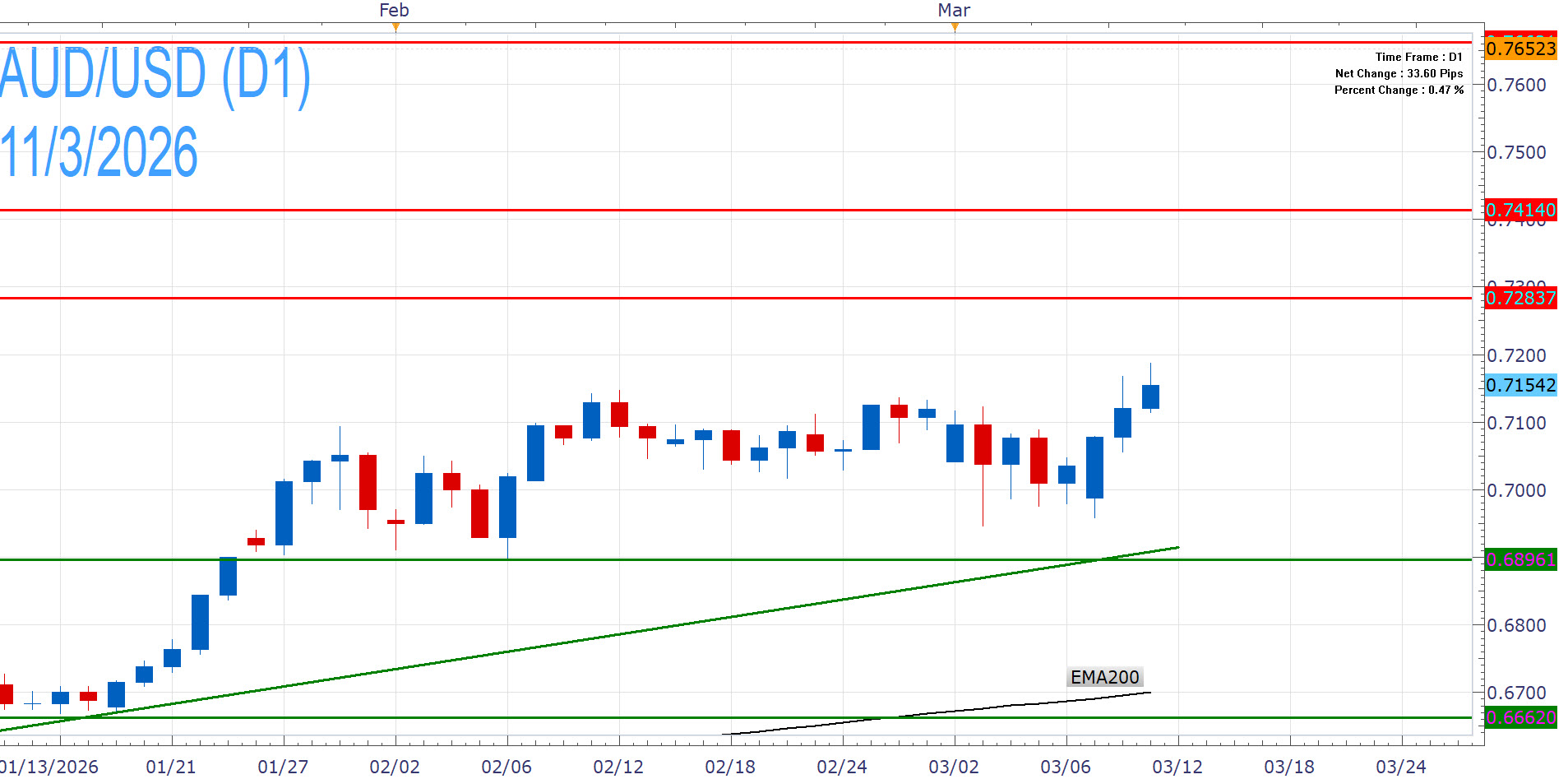
The Australian dollar benefits from the RBA's lead in monetary tightening - with AUD/USD hitting nearly four year highs - and another hike could support further strength. A hold, on the other hand, could disappoint hawks and weigh on the currency, while risk aversion is not a favourable backdrop.
US Federal Reserve – Wednesday 18 March
The US central bank is on a rate-cutting cycle and its most recent projections from December [6] point to one more cut this year, with markets at times seeing scope for more. Easing inflation and a poor jobs report underscoring a weakening labour market offer reasons for additional easing. Furthermore, the next Fed governor could be more aligned with President Trump's preference for lower borrowing costs.
However, markets do not expect the Fed to move on Wednesday and the strikes against Iran have triggered a hawkish repricing, pushing back the timing of any cut. The spike in energy prices sparks reflationary risks, making such action much harder against an already challenging macro backdrop and divisions among policymakers. Minneapolis Fed President Kashkari (voter) has said he feels less confident that inflation is heading in the right direction [7], while Governor Hammack told the New York Times that interest rates could remain steady for quite some time. [8]
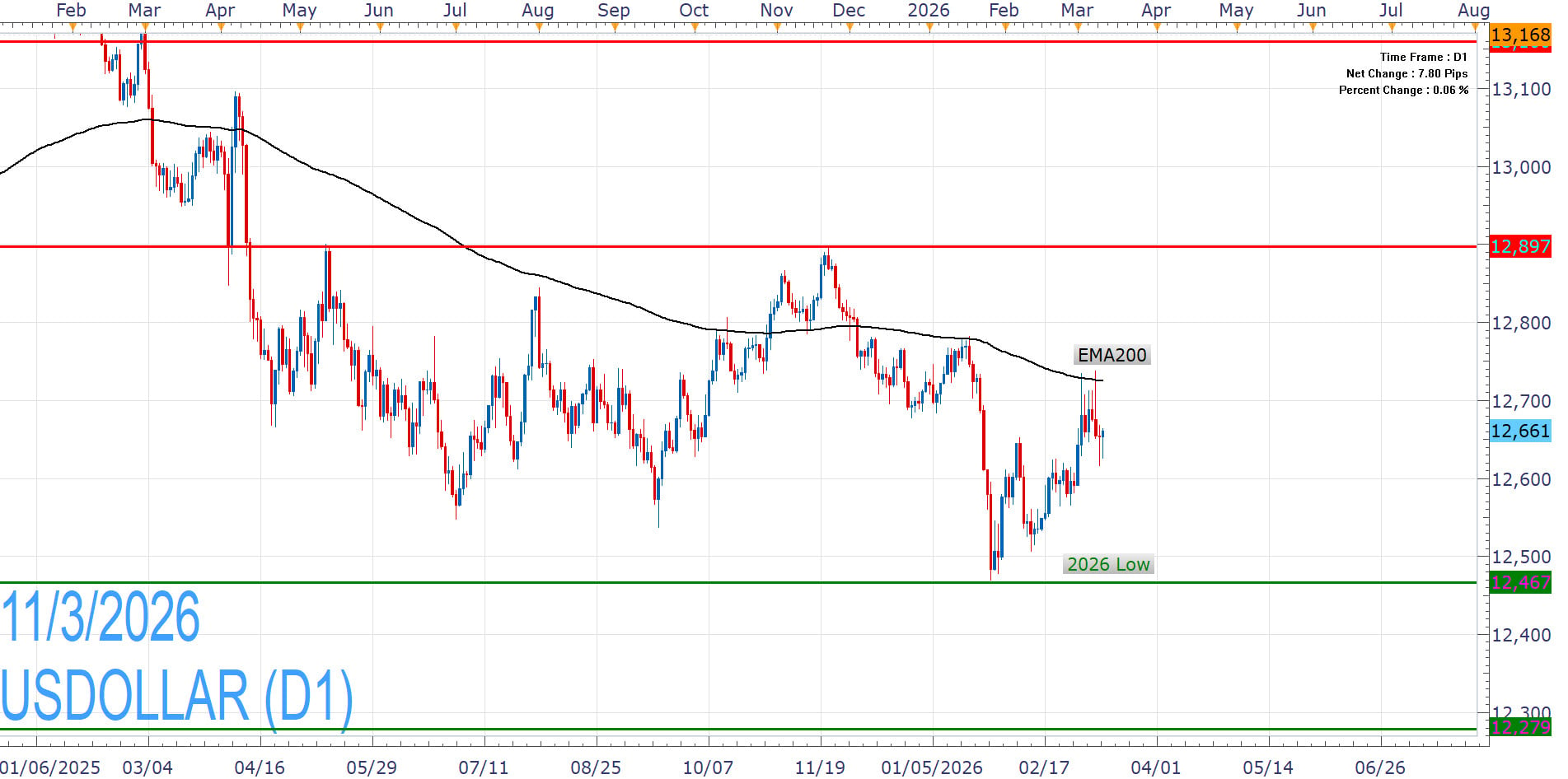
The USDOLLAR has benefited from risk-off flows and any hawkish signals could offer additional support. Nonetheless, the greenback is likely to continue facing headwinds from de-dollarisation and currency debasement trends. These unfavourable forces can be accelerated by macro and geopolitical uncertainty, keeping it vulnerable to new multi-year lows.
Bank of Canada - Wednesday 18 March
The Bank of Canada refrained from lowering rates at its last two meetings and could stay on hold next Wednesday as well. With rates at 2.25% after 225 basis points of cuts since the mid-2024 pivot, policymakers may have little room for additional easing.
The Bank of Canada believes the current rate is "appropriate" to keep inflation close to the 2% target and the economy on a growth trajectory [9]. The Middle East conflict could reinforce the holding stance, as the spike in energy prices may benefit the oil-producing economy and create upward inflation pressure. Meanwhile, Deputy Governor Sharon Kozicki said last week that monetary policy "needs to be tightened even when the economy is weak" at times [10], in what appeared to be laying the groundwork for an eventual shift.
However, the economy remains frail as it faces tariff headwinds, USMCA uncertainty and renewed geopolitical risks. These forces create reasons for a cautious approach but could also build pressure for additional easing.
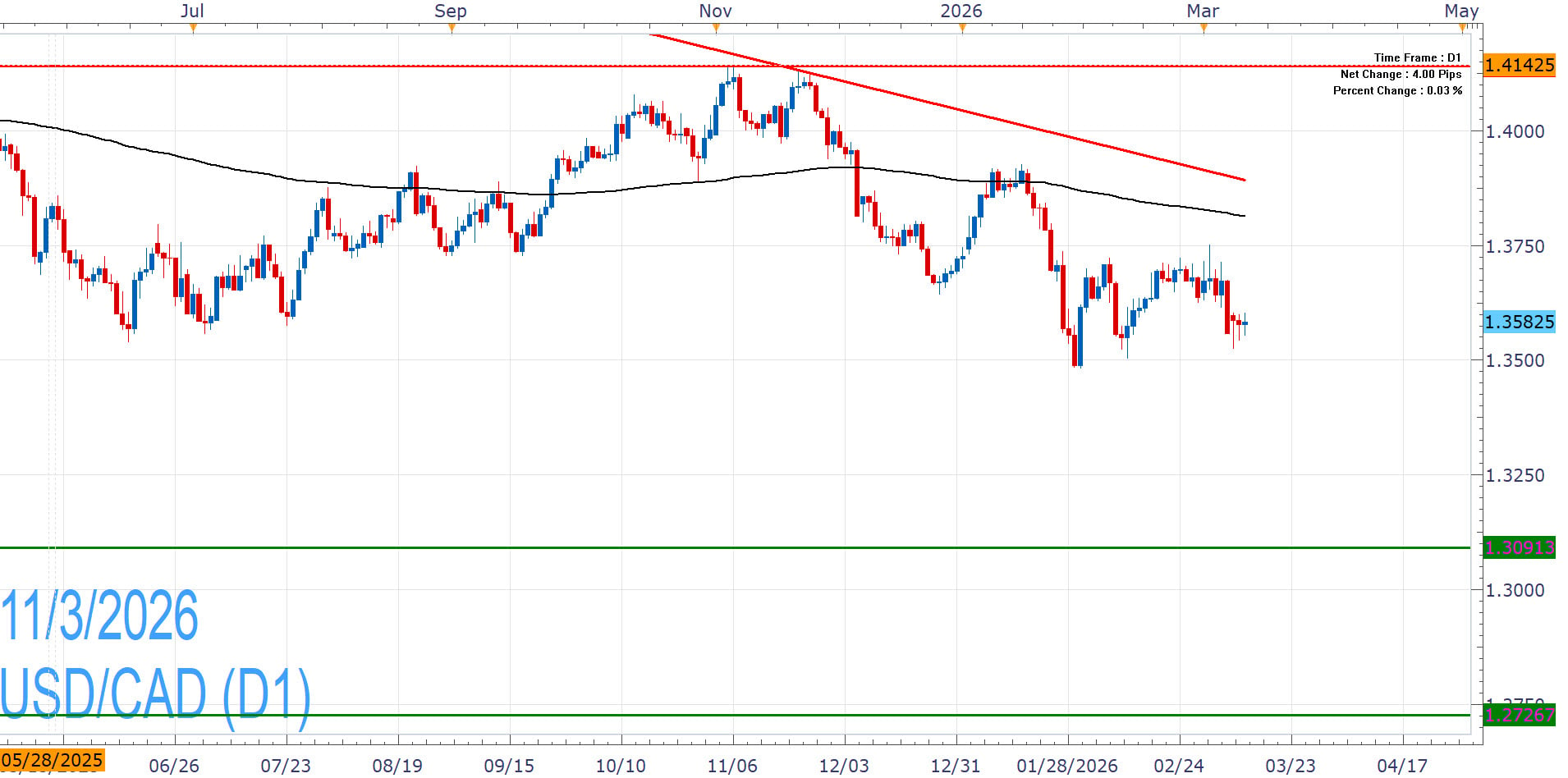
The Canadian dollar stands to benefit from higher oil prices and BoC caution, which can push USD/CAD to new multi-year lows. Yet economic risks that sustain pressure for easing, alongside geopolitical uncertainty, can support the pair.
Bank of Japan – Thursday 19 March
Unlike most of its major peers, the Bank of Japan is on a tightening path, having raised rates by 65 basis points since July 2024. At their last meeting earlier this year, policymakers refrained from additional hikes but it was nonetheless a hawkish decision. One member dissented in favour of a rate increase, while officials upgraded their inflation and growth forecasts for the next fiscal year and reiterated their tightening bias. [11]
Recent economic data and political developments reinforce the case for further rate increases. Real wages rose in January (+1.4% y/y) for the first time in thirteen months, while the country's largest union, Rengo, is seeking an average wage hike of 5.94% for the next fiscal year [12], above the current one. The economy also shows resilience thanks to AI investment and a trade deal that lowers US tariffs, while the electoral victory of PM Takaichi could lead to bolder fiscal stimulus.
On the other hand, the Bank of Japan has maintained a cautious stance and the bar is high for another rate increase on Thursday, as the US-Iran conflict complicates its path. Oil supply disruption and the relevant spike in prices could hurt the economy and put downward pressure on underlying inflation, since Japan is a net oil importer sourcing 94% of supply from the Middle East. [13]
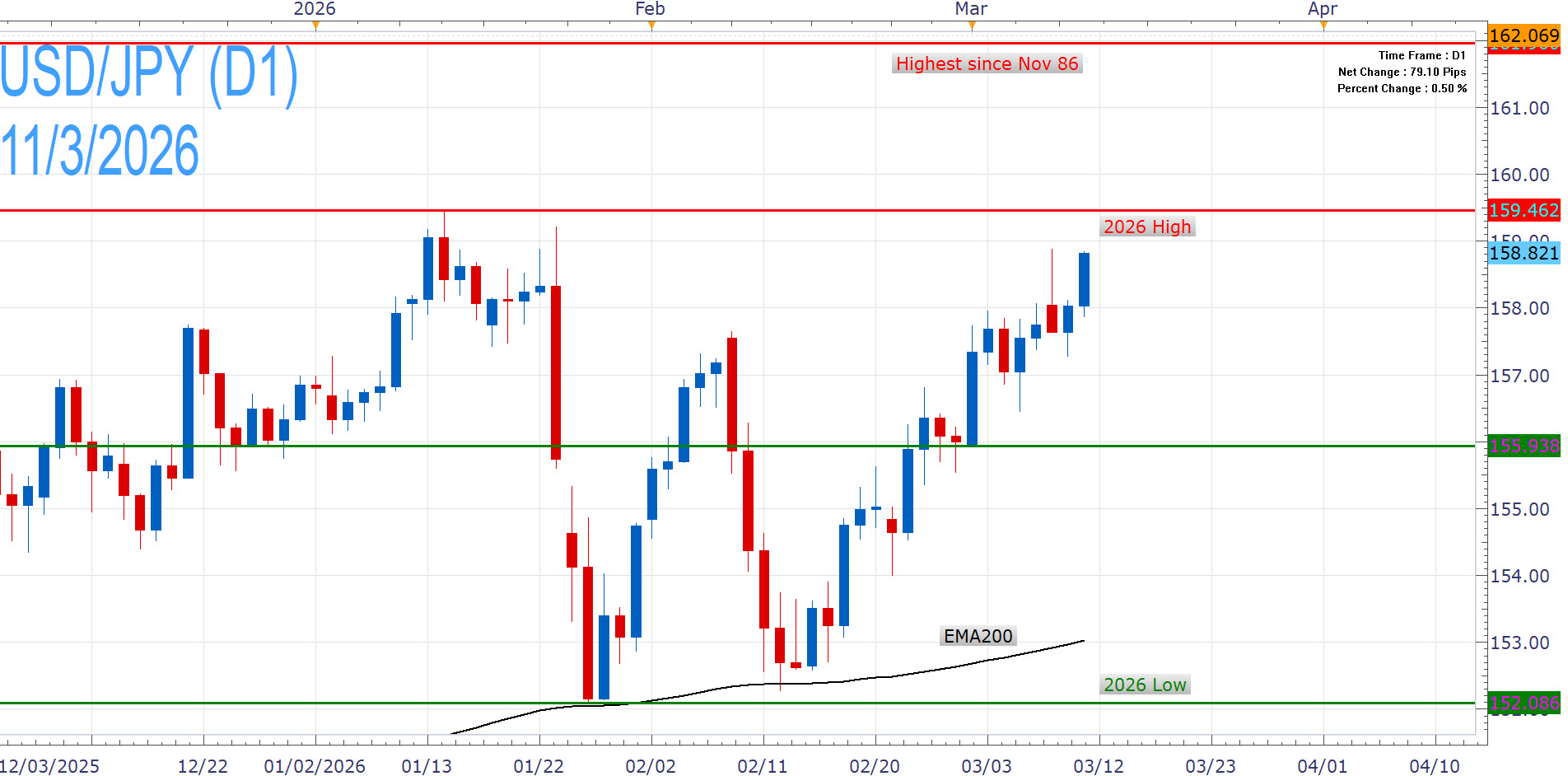
A hawkish BoJ outcome alongside intervention risks could support the yen, especially against currencies like the Eurom, aided by risk-off flows. However, growth risks from higher energy prices could restrain the BoJ, just as the currency faces pressure from fiscal stimulus and deficit concerns. Along with the greenback's energence as the safe haven of choice during this turbulent period, USD/JPY is on track for new multi-year highs.
Swiss National Bank - Thursday 19 March
Switzerland's CPI has been hovering around 0% for almost a year, sustaining the risk of the SNB undershooting its inflation target. Combined with a persistently strong franc drawing fresh risk-off demand from the US-Iran conflict, pressure for additional easing may linger.
However, the central bank has shown clear reluctance to push interest rates below zero and Chairman Schlegel told Bloomberg earlier this year that the prospect of negative inflation prints "is not a problem" [14]. Furthermore, the Middle East conflict sparks reflationary risks that put upward pressure on consumer prices. Officials may also prefer to address franc strength through FX intervention rather than monetary policy. Alluding to this, Vice Chair Martin spoke of higher readiness to intervene, according to Reuters. [15]
As a result, the SNB will have strong incentive to keep interest rates at 0% for a third straight meeting on Thursday. The implications of the military conflict raise the chances that the next move will be a hike, and officials will be aided by an upgraded growth forecast following the trade deal with the US that lowered tariffs from 39% to 15%. [16]
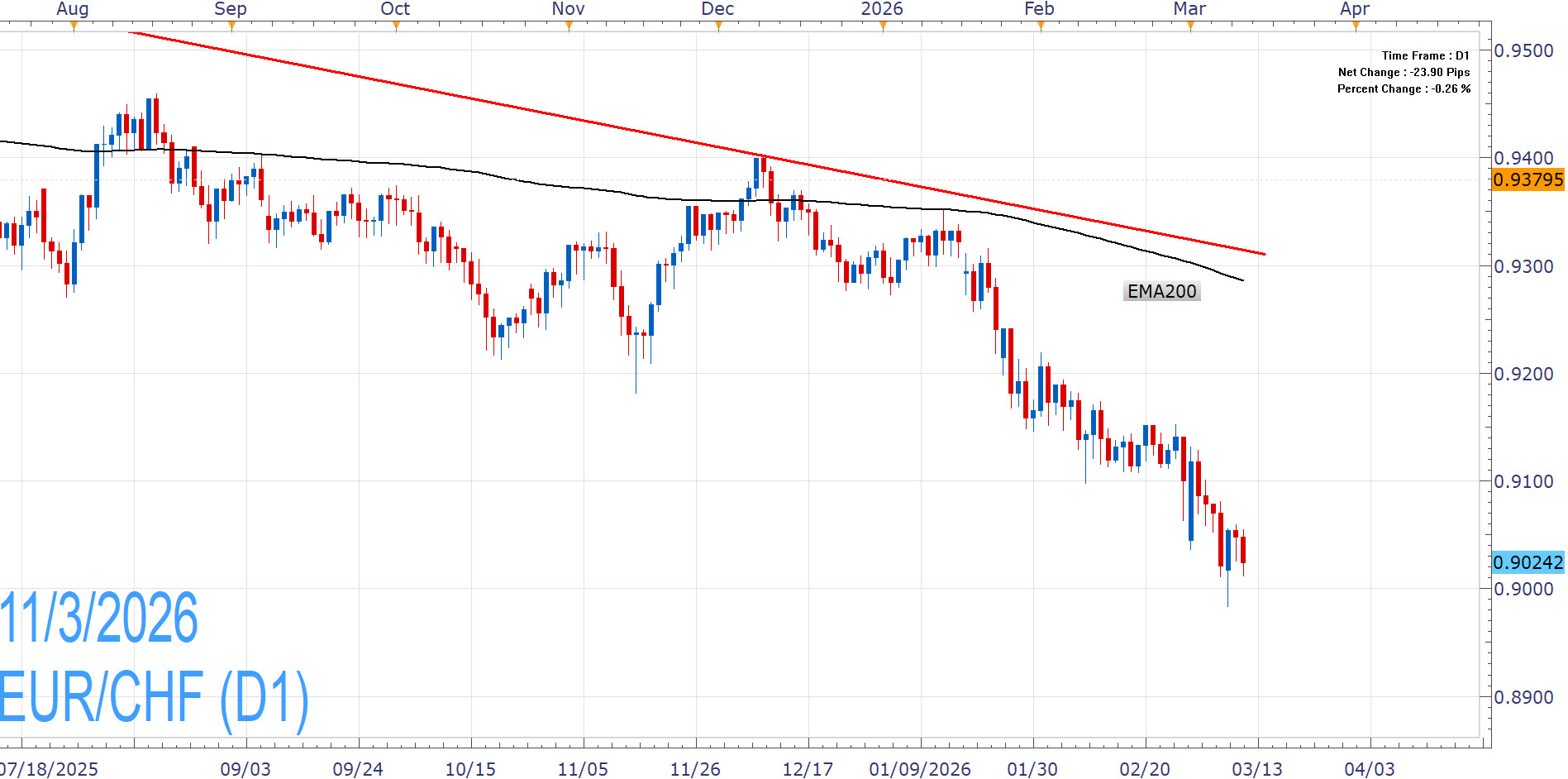
If the SNB refrains from negative rates, the franc could benefit as it also draws risk-off flows, wich can send EUR/CHF to record lows. However, dovish hints alongside intervention prospects could contain the pair's decline.
Bank of England - Thursday 19 March
With unemployment at 5.2% and at multi-year highs, cooling wage growth, frail economic activity and easing price pressures, the Bank of England has strong incentive to lower rates further. Despite holding at the last meeting [17], four of nine members dissented in favour of a cut and Governor Bailey hinted at the potential for a March cut in subsequent remarks on Bloomberg. [18]
Nonetheless, the spike in energy prices could prevent additional easing on Thursday, sparking reflationary risks at a time when the BoE is still struggling to rein in the high cost of living. The situation also raises chances for a prolonged hold and even that the next move could ultimately be a hike.
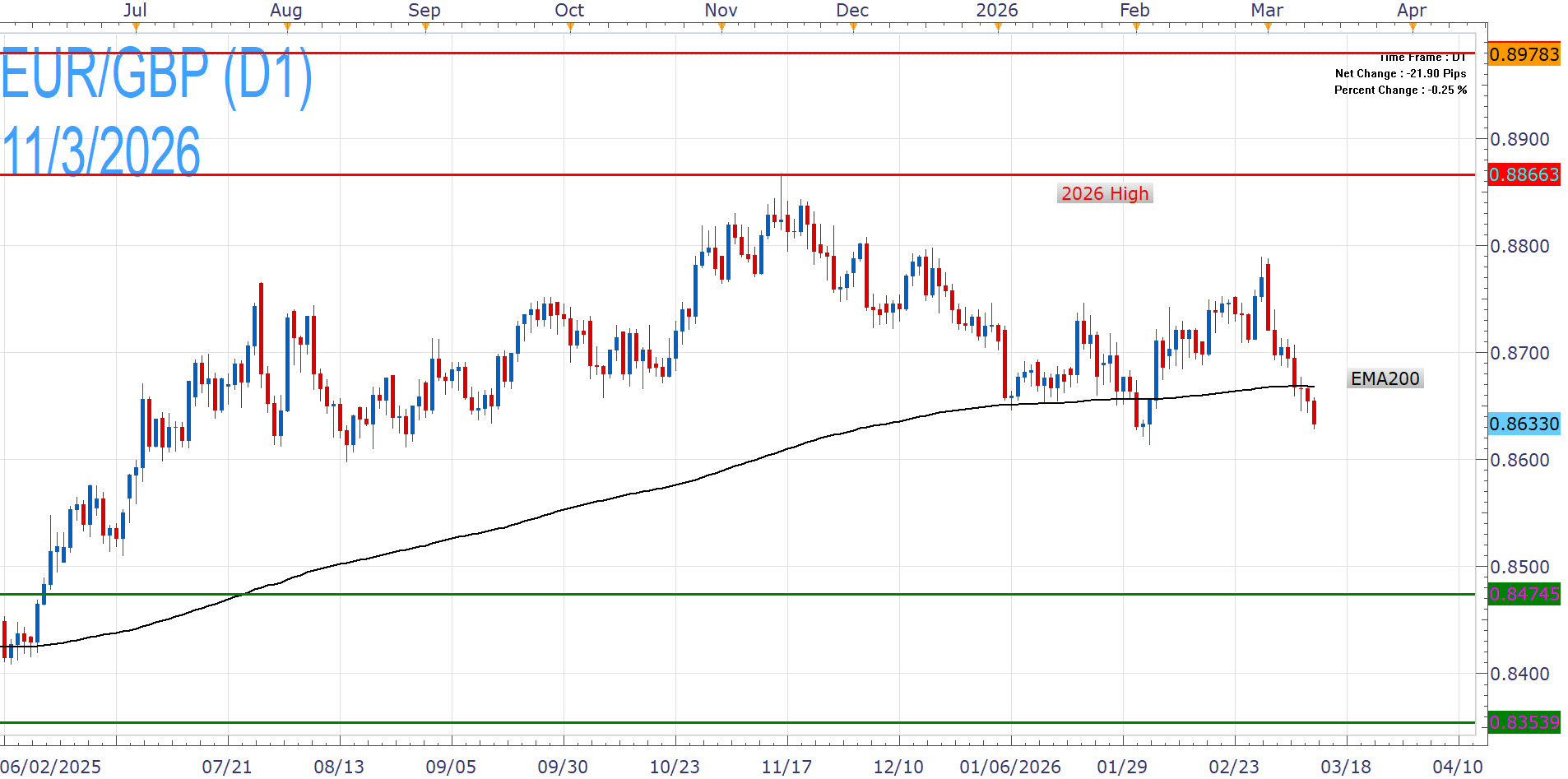
Any cautious stance from the BoE could lend near-term support to the pound and excacerbate the EUR/GBP decline. However, sterling is unlikely to appreciate meaningfully against economic headwinds and the pair can find renwed support form a favourable monetary policy differential.
European Central Bank - Thursday 19 March
Four years after Russia invaded Ukraine and sparked an energy crisis, Europe faces the risk of another shock as military strikes against Iran send oil and gas prices soaring. The ECB may want to avoid past mistakes, having been slow to react to surging inflation then, not raising interest rates until July of that year.
The ECB is at the end of a 200 basis point easing cycle, having held rates steady for the past several months. The Middle East conflict raises the chances that the next move will be a rate hike, but pivoting at Thursday's meeting may be premature.
Although various policymakers have acknowledged the reflationary risks from higher energy prices, they do not appear ready to move. Ms Schnabel, for example, reiterated the view that monetary policy is "in a good place" [19]. The ECB has good reason to be cautious, since the European economy remains fragile and could take another hit just as it is trying to find its footing.
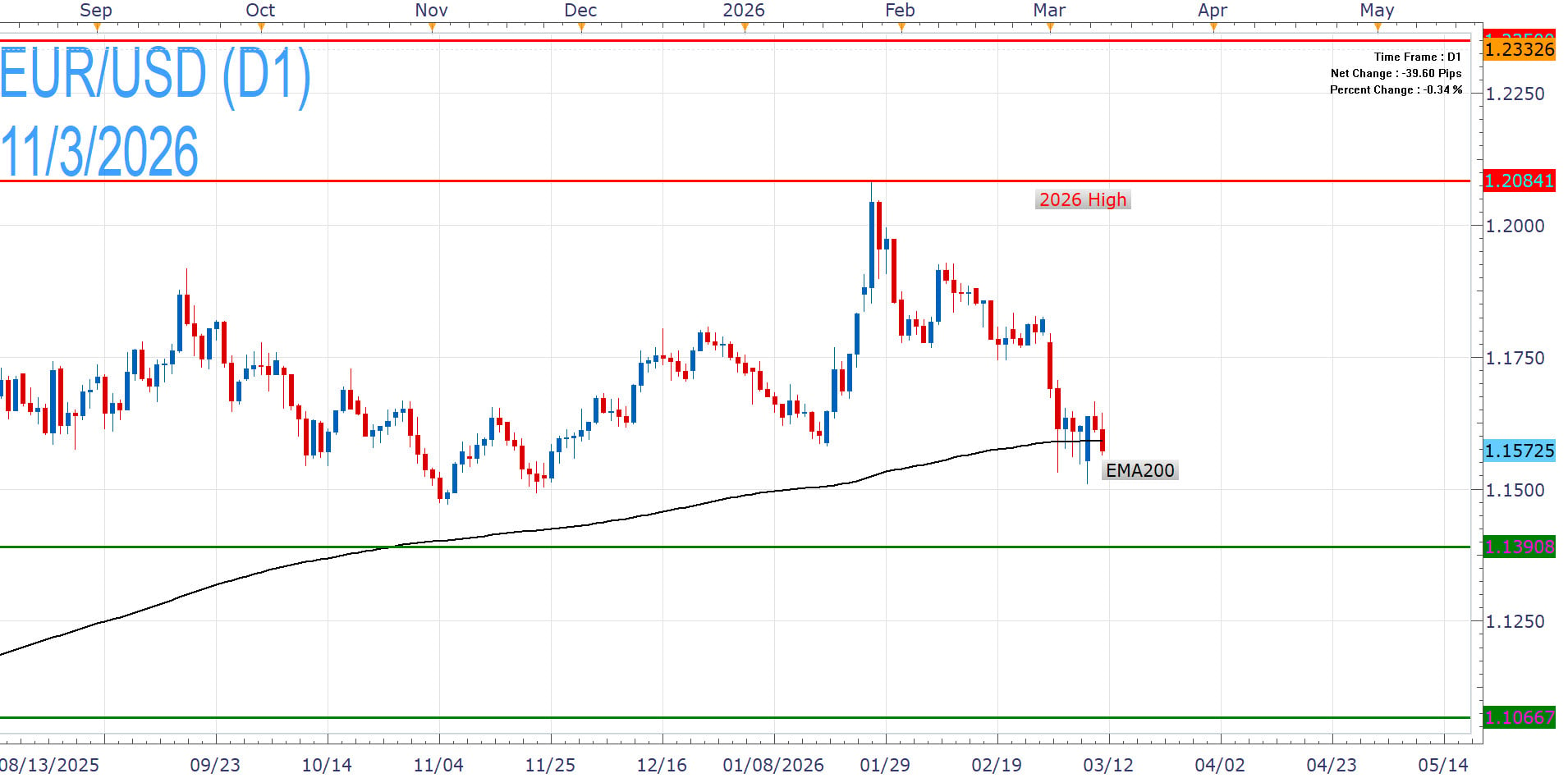
The euro stands to benefit from any hawkish signals by the ECB that underscore favourable monetary policy dynamics, which couould help EUR/USD rebound. However, stagflation risks and USDOLLAR safe haven appeal can perpetuate the decline.

Nikos Tzabouras
Senior Financial Editorial Writer
Nikos Tzabouras is a graduate of the Department of International & European Economic Studies at the Athens University of Economics and Business. With extensive experience in market analysis and a strong foundation in international relations, he brings a unique perspective to financial markets. Nikos emphasizes not only technical analysis but also on fundamentals and the growing influence of geopolitics on financial trends.
As a Senior Financial Editorial Writer, he delivers comprehensive and forward-looking insights across a wide range of asset classes, including equities, commodities, and currencies. His work explores how macroeconomic events, political developments, and global policies impact market dynamics, providing readers with a deeper understanding of both short-term movements and long-term trends.



Any opinions, news, research, analyses, prices, other information, or links to third-party sites contained on this website are provided on an "as-is" basis, as general market commentary and do not constitute investment advice. The market commentary has not been prepared in accordance with legal requirements designed to promote the independence of investment research, and it is therefore not subject to any prohibition on dealing ahead of dissemination. Although this commentary is not produced by an independent source, Friedberg Direct, FXCM or its affiliates takes all sufficient steps to eliminate or prevent any conflicts of interests arising out of the production and dissemination of this communication. The employees of Friedberg Direct and FXCM commit to acting in the clients' best interests and represent their views without misleading, deceiving, or otherwise impairing the clients' ability to make informed investment decisions. For more information about the Friedberg Direct's internal organizational and administrative arrangements for the prevention of conflicts, please refer to the Firms' Managing Conflicts Policy. Please ensure that you read and understand our Full Disclaimer and Liability provision concerning the foregoing Information, which can be accessed here.**