
Market Threads – Rates, Risk and Breakouts Set the Next Major Market Move

.png)
Tracking important market threads across currencies, commodities, and indices.
- Oil is at a make-or-break moment as momentum turns bullish, geopolitics tighten the market and UKOil and USOil close in on the levels that could define the next major move.
- USDOLLAR is at a critical crossroads as bearish momentum builds and US rates could determine whether key support at 12,670 finally breaks.
- Gold is breaking higher as geopolitics, central-bank buying and a potentially weaker dollar line up behind the bulls.
- SPX500 is consolidating near record highs as booming earnings and a friendlier rates backdrop put the bulls within reach of another breakout.
Cross Asset View
Across major markets, several important technical and macro inflection points are beginning to line up. Oil, the USDOLLAR, XAUUSD and the SPX500 are each testing levels that could shape the next phase of price action, while shifting rate expectations and geopolitical risk continue to influence the broader backdrop. The result is a cross-asset environment where the next decisive moves may be closely connected.
Oil
Technical Analysis
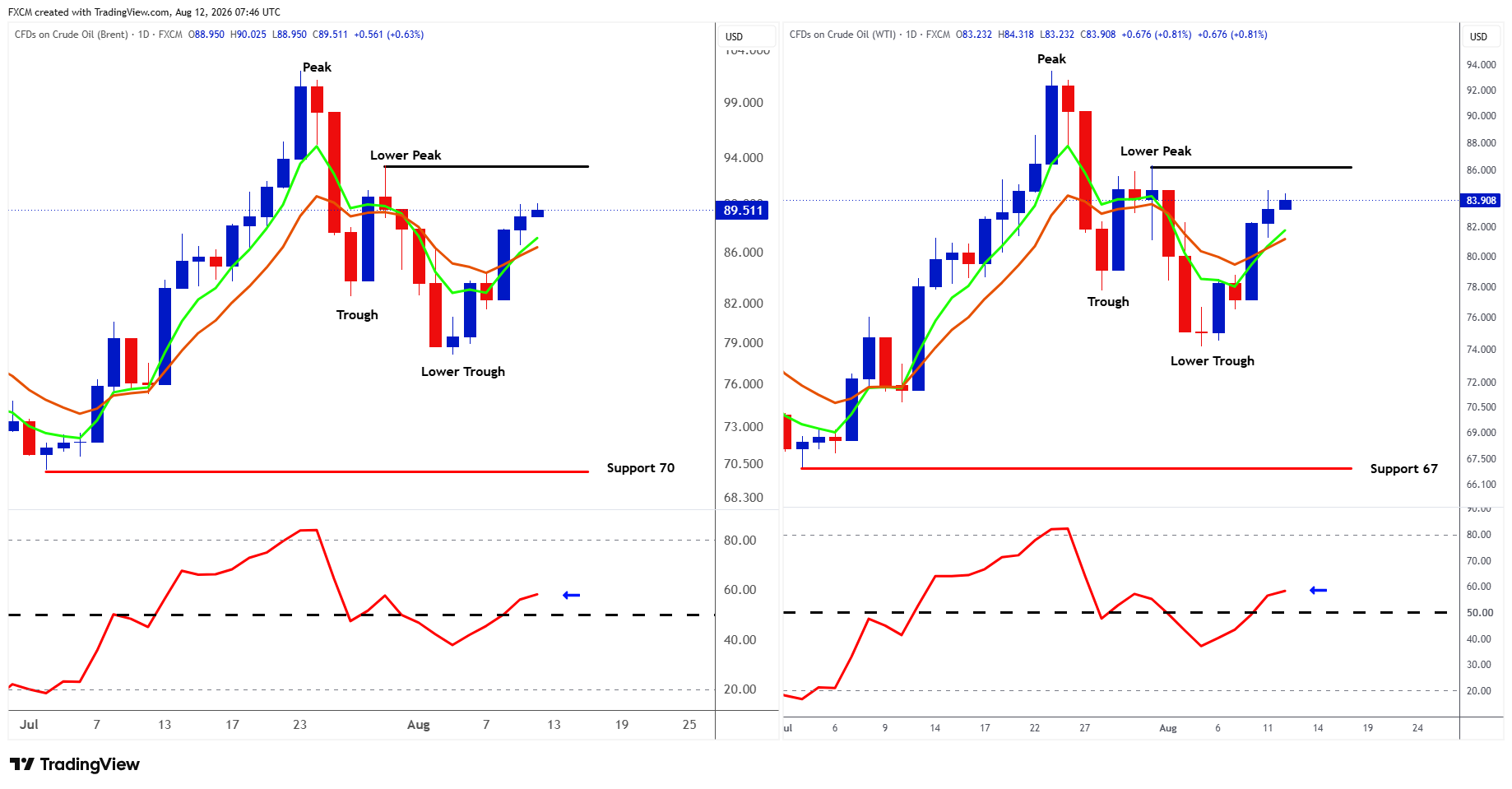
UKOil has recovered from its early-August lower trough, with price now back above both short-term moving averages and momentum improving markedly. RSI has pushed back above the neutral 50 level, reinforcing the sense that buyers have regained control in the near term. The bigger technical question, however, remains unresolved. The rebound is still occurring within a structure defined by a lower peak and lower trough, leaving resistance around the previous peak near $94 as the critical battleground. A decisive break above that level would disrupt the bearish sequence and provide much stronger evidence that a genuine trend reversal is under way. Until then, the move towards $90 should be treated as an increasingly constructive recovery rather than a confirmed new uptrend, with the reaction at the previous peak likely to be the defining move.
USOil is displaying a similar change in character, rebounding strongly from its lower trough near $75 and reclaiming its short-term moving averages as momentum swings back in favour of the bulls. RSI has climbed through 50 and is approaching 60, showing that the recovery has real momentum behind it rather than simply reflecting an oversold bounce. Nevertheless, the chart still carries the scars of the July reversal, with the lower peak around $86-87 standing directly in the path of the advance. That level now matters far more than the improving momentum indicators. A clean move through the previous peak would break the pattern of lower highs and lower lows and materially strengthen the bullish technical case. Failure there, by contrast, would leave open the possibility that the current rally is merely another recovery within a broader corrective phase. For USOil, the next few dollars could therefore tell us considerably more than the last ten.
Fundamental Perspective
The oil rally is becoming a test of whether geopolitical disruption can overpower tentative signs of supply recovery. UKOil and USOil have pushed higher as hopes for a US-Iran settlement have faded, while Iran insists the Strait of Hormuz will remain closed unless its conditions are met and vessel traffic fell to just eight ships on Tuesday, compared with 125-140 a day before the conflict. That is keeping crude prices elevated and highly sensitive to developments in the Middle East, although some counterweights are emerging.
Industry data showed a provisional 9.1 million-barrel increase in US crude stocks, OPEC production may have recovered by 1.17 million bpd in July, and seven OPEC+ producers have agreed a 188,000 bpd production adjustment for September. Yet the broader market remains tight. The EIA expects Hormuz disruptions to drive further inventory drawdowns and UKOil to average around $85 in the third quarter before recovering production and rebuilding inventories help pull the benchmark towards an average of $69 in 2027.
The current advance therefore remains primarily supply- and geopolitics-driven, making a break above the previous price peaks particularly significant. This would suggest the market is beginning to price the disruption as more persistent rather than temporary.
USDOLLAR
Technical Analysis
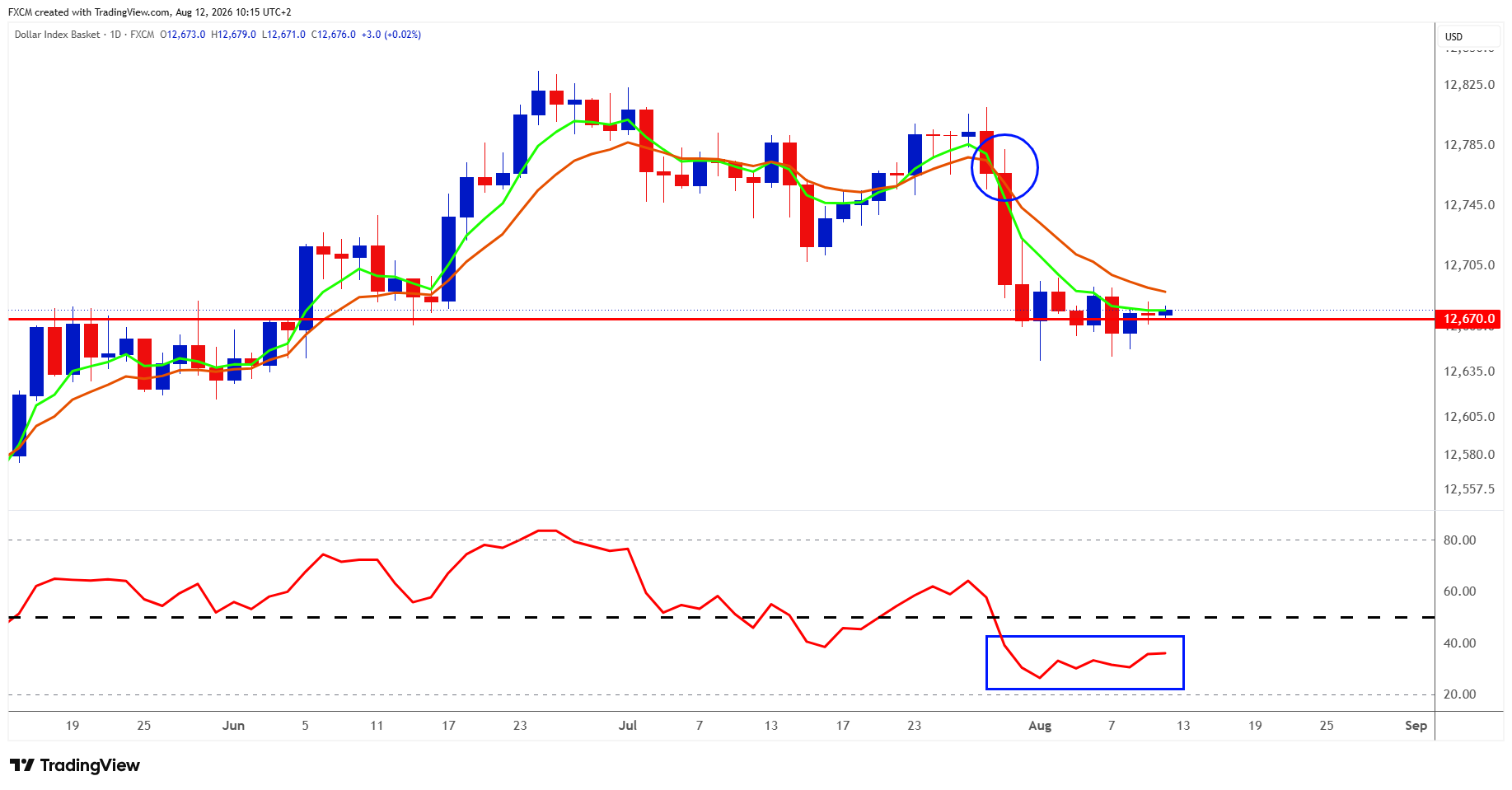
FXCM's USDOLLAR is sitting at a technically important inflection point around 12,670, a level the market has repeatedly respected as both support and resistance in the past. The sharp late-July breakdown has left the short-term trend damaged, with price trading beneath both EMAs and the faster EMA now below the slower one, maintaining a bearish formation. Momentum also remains weak, with RSI stuck below the neutral 50 level despite stabilising from its recent lows. The longer RSI remains below 50 while price continues to press against 12,670, the greater the risk that support eventually gives way, particularly as repeated tests can erode the willingness of buyers to defend the level. A decisive close below 12,670 would therefore be a bearish technical development and could open the door to another leg lower. Conversely, holding the level and reclaiming the short-term EMAs alongside an RSI move back above 50 would be the first meaningful evidence that downside pressure is beginning to fade.
Fundamental Perspective
The USDOLLAR is caught between safe-haven demand and an increasingly uncertain US interest-rate advantage. Renewed Gulf tensions are providing support, but a key medium-term influence remains the path of Federal Reserve policy and the rate expectations reflected in the US two-year Treasury yield.
July payrolls unexpectedly fell by 23,000 against expectations for an 80,000 increase, triggering a sharp decline in two-year yields and a broad dollar sell-off as expectations for further Fed tightening eased. Our calculated 46% correlation between USDOLLAR and the two-year yield reinforces that relationship, although it may partly have been distorted recently by the rare coordinated US-Japanese intervention to support the yen.
Attention now turns to July CPI, with markets effectively split between a September Fed hike and no change. A softer inflation reading could reduce tightening expectations, pull the two-year yield lower from around 4.2% and place renewed pressure on the dollar, while stubborn inflation could do the opposite.
With USDOLLAR already testing 12,670, the next decisive move in the currency may therefore be heavily influenced by what happens in the US rates market.
Keep An Eye on EURUSD
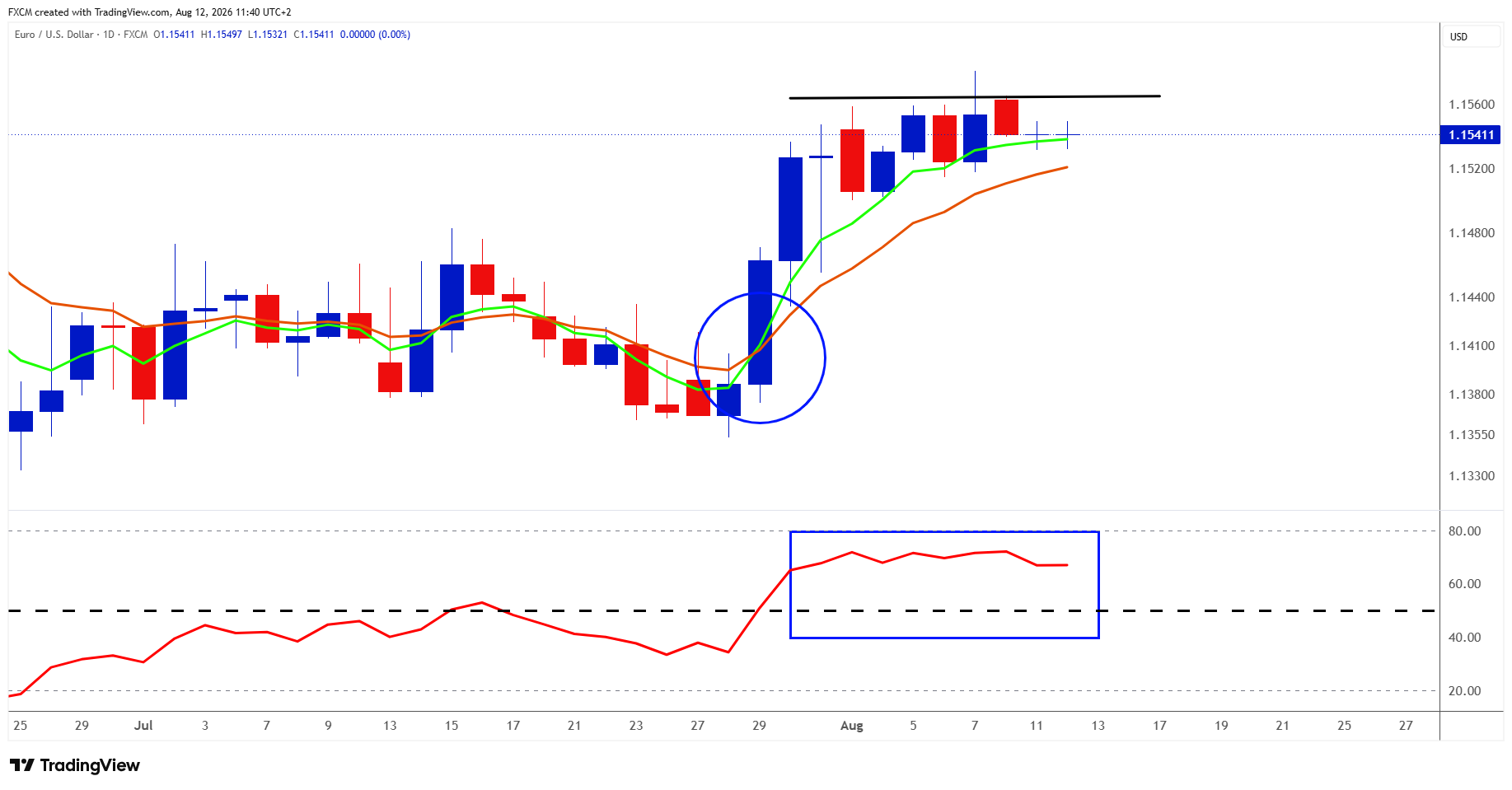
EURUSD is pressing against an important 1.1560 to 1.1570 resistance zone after its sharp late-July reversal shifted the short-term structure decisively higher. Price remains above both rising EMAs, with the faster average above the slower one, while RSI has cooled from overbought territory but remains comfortably above 50, suggesting momentum has paused rather than failed.
Fundamentally, the ECB held its deposit rate at 2.25% in July after June's 25bp hike, while euro-area inflation edged back up to 2.9% in July, keeping the possibility of further tightening alive without committing policymakers to another move. Attention now turns to today's US CPI release, with markets roughly evenly split on a September Fed hike following July's weak employment report. A softer inflation print could reduce Fed tightening expectations, pressure US yields and the USDOLLAR and give EURUSD the catalyst needed to clear resistance, although elevated oil prices remain an important counterweight given Europe's greater vulnerability to the energy shock.
That makes USDOLLAR's 12,670 support particularly important because a decisive break below it, accompanied by EURUSD clearing 1.1560 to 1.1570, would provide compelling cross-market confirmation that broad dollar weakness is gaining traction.
Gold
Technical Analysis
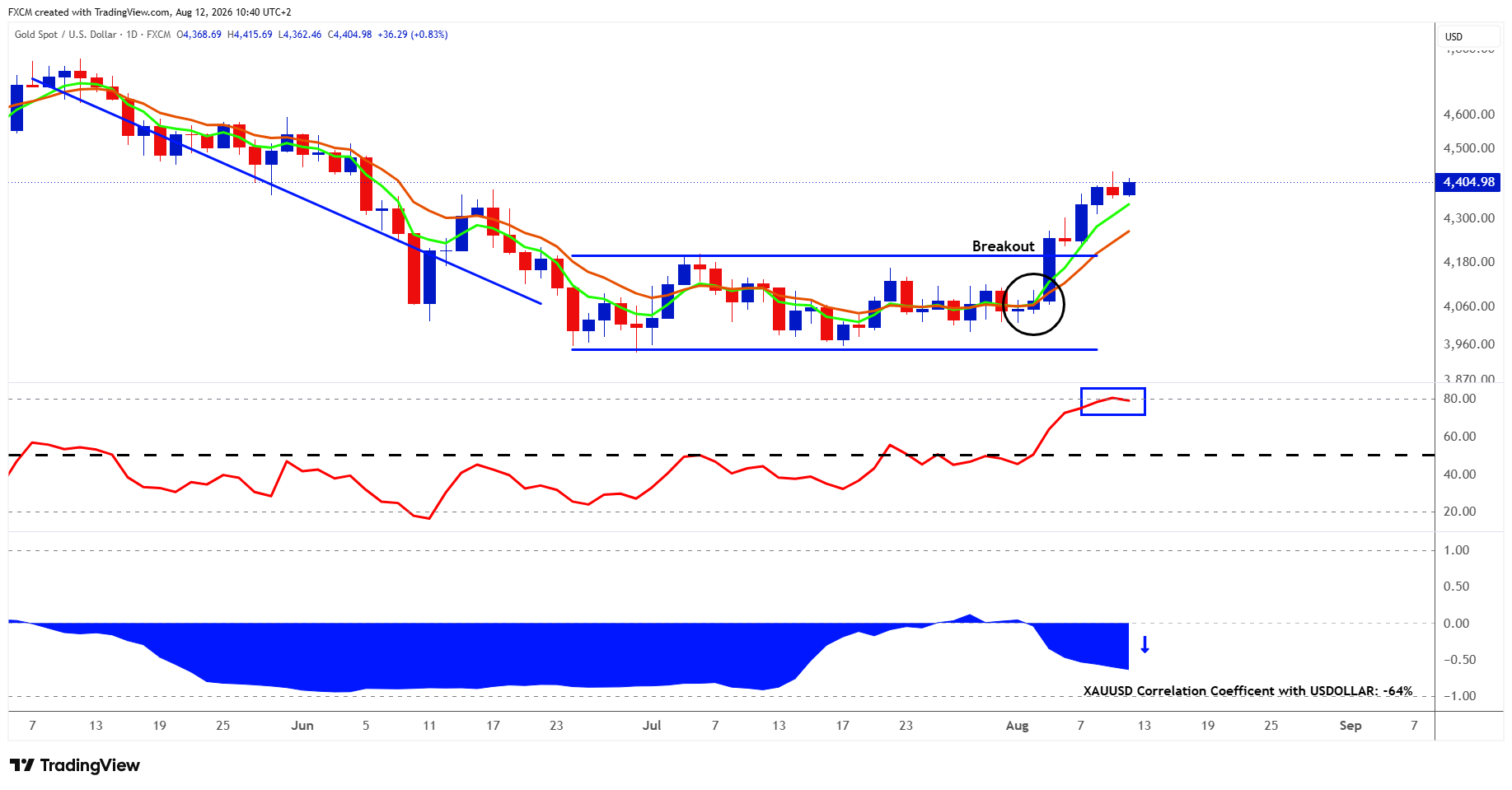
XAUUSD has delivered a convincing breakout from its multi-week accumulation range, clearing resistance around $4,200 and extending rapidly towards $4,400. The move has also shifted the short-term trend decisively higher, with price above both EMAs and the faster EMA leading the slower one in a bullish formation. Momentum became stretched as RSI briefly pushed into overbought territory, but it is now beginning to normalise without a meaningful loss of price strength, which is constructive and suggests the market may be working off excess momentum rather than signalling an immediate reversal.
The relationship with the dollar is also becoming important again, with the rolling correlation coefficient between XAUUSD and USDOLLAR strengthening to around -64%. That does not mean gold must move opposite the greenback on every session, but it does indicate a reasonably strong inverse relationship at present, so further dollar weakness would provide an additional tailwind for XAUUSD.
Technically, the breakout remains intact while price holds above the former $4,200 resistance zone, with any consolidation above that level potentially setting the stage for another push higher.
Fundamental Perspective
Gold's fundamental backdrop is becoming increasingly interesting as several powerful forces converge. Renewed Gulf tensions are supporting safe-haven demand, but the same conflict is lifting energy prices and threatening to keep inflation elevated, potentially keeping US rate expectations higher for longer. That makes today's US CPI release the immediate pivot, with markets roughly evenly split on a September Fed hike.
A softer inflation print could reduce tightening expectations, pull Treasury yields and the dollar lower and, given XAUUSD's current -64% rolling correlation with USDOLLAR, provide an additional tailwind for gold, while hotter inflation could produce the opposite response. Beyond the macro trade, official-sector demand remains supportive, with central-bank net purchases rebounding sharply to 289 tonnes in Q2 and China adding nearly 20 tonnes to its reserves in July, its largest monthly increase since October 2023.
Gold therefore sits at an unusual intersection where geopolitical risk, stronger official-sector buying and the possibility of a weaker dollar could reinforce one another, making the next move in US inflation and rates particularly important for determining whether the breakout can extend.
Index in Focus: SPX500
Technical Analysis
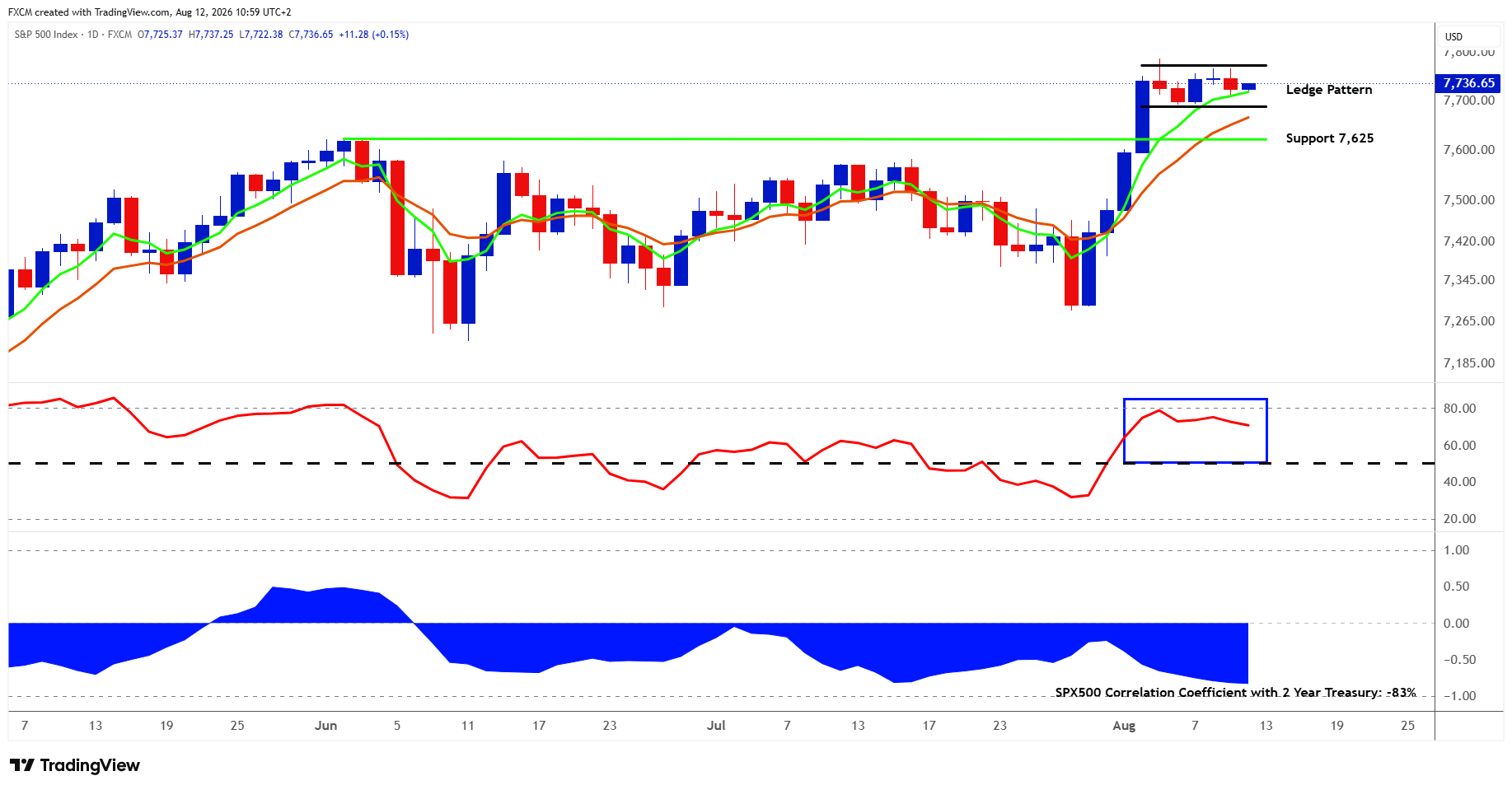
SPX500 is consolidating in a tight ledge pattern near record highs after breaking sharply above the 7,625 resistance zone, leaving the next move from this range as the key technical signal. The broader structure remains constructive, with price above both rising EMAs and the faster average comfortably above the slower one. RSI has eased from overbought territory but remains well above 50, and as long as it holds there while price stays near the highs, the consolidation may simply be a pause before another advance. A clean break above 7,770 to 7,780 would strengthen the bullish case and could open the door to a fresh leg higher, while a break below 7,690 to 7,700 would suggest momentum is fading and bring the 7,625 breakout zone back into focus. For now, SPX500 looks more like it is resting than reversing, but the direction of the ledge break should determine whether the bulls remain in control.
Fundamental Perspective
The SPX500 still has a powerful earnings engine behind it, but an old pillar of the bull case appears to be re-emerging as less-hawkish interest-rate expectations become supportive for equities again. Second-quarter S&P 500 earnings were recently tracking roughly 31% above a year earlier, with results comfortably exceeding expectations and AI-related investment continuing to underpin technology profits. At the same time, our rolling correlation between SPX500 and the US two-year Treasury yield has strengthened to around -83%, suggesting that lower short-term yields and less-hawkish Fed expectations are once again proving supportive for equities.
Recent price action reinforces that interpretation, with the S&P 500 closing at a record high after July payrolls unexpectedly fell by 23,000 and expectations for a September rate hike declined sharply. That makes today's CPI release particularly important, with markets currently assigning roughly even odds to a September hike. A softer inflation reading could push the two-year yield lower and reinforce the equity rally, while a hotter print would threaten the opposite outcome, particularly with Middle East tensions keeping energy prices elevated and inflation risks alive.
The interesting question for SPX500 is therefore whether strong earnings can continue doing the heavy lifting while a more favourable rates backdrop re-emerges as a second pillar of support.

Russell Shor
Senior Market Strategist
Russell Shor is a Senior Market Strategist at FXCM, having been promoted to the role in 2025 in recognition of his depth of insight and consistent delivery of high-impact market analysis. He originally joined FXCM in October 2017 as a Senior Market Specialist.
Russell holds an Honours Degree in Economics from the University of South Africa, is a certified FMVA®, and a full member of the Society of Technical Analysts (UK). With over 20 years of experience in financial markets, his work is renowned for its clarity, precision, and strategic value across asset classes.


Any opinions, news, research, analyses, prices, other information, or links to third-party sites contained on this website are provided on an "as-is" basis, as general market commentary and do not constitute investment advice. The market commentary has not been prepared in accordance with legal requirements designed to promote the independence of investment research, and it is therefore not subject to any prohibition on dealing ahead of dissemination. Although this commentary is not produced by an independent source, FXCM takes all sufficient steps to eliminate or prevent any conflicts of interests arising out of the production and dissemination of this communication. The employees of FXCM commit to acting in the clients' best interests and represent their views without misleading, deceiving, or otherwise impairing the clients' ability to make informed investment decisions. For more information about the FXCM's internal organizational and administrative arrangements for the prevention of conflicts, please refer to the Firms' Managing Conflicts Policy. Please ensure that you read and understand our Full Disclaimer and Liability provision concerning the foregoing Information, which can be accessed here.