
Market Threads – Oil, Inflation, and Rising Yields are Reshaping Global Markets

.png)
Tracking important market threads across currencies, commodities, and indices.
- Is oil preparing for another breakout? Explore the technical signals, Hormuz supply risks, and global demand pressures driving today's volatile energy market.
- Bullish momentum is returning to the USDOLLAR as oil shocks, rising yields, and geopolitical tensions reshape global markets.
- Gold is losing momentum as surging yields, oil-driven inflation fears, and dollar strength reshape the market outlook.
- The JPN225 is at a critical moment as AI optimism, yen weakness, and shifting BOJ policy collide.
Cross-Asset View
Markets are increasingly being driven by one dominant theme: higher oil prices feeding inflation fears and pushing global bond yields sharply higher. Crude oil remains supported by ongoing disruption around the Strait of Hormuz, while rising Treasury yields and a stronger dollar are tightening financial conditions across markets.
That combination is helping the greenback regain momentum, but it is simultaneously placing heavy pressure on gold, which is struggling against the headwind of higher real yields and a firmer dollar despite persistent geopolitical tensions.
In many ways, markets are no longer trading purely on growth expectations, but on whether elevated energy prices begin creating a broader inflation problem that forces central banks to stay restrictive for longer.
Oil
Technical Analysis
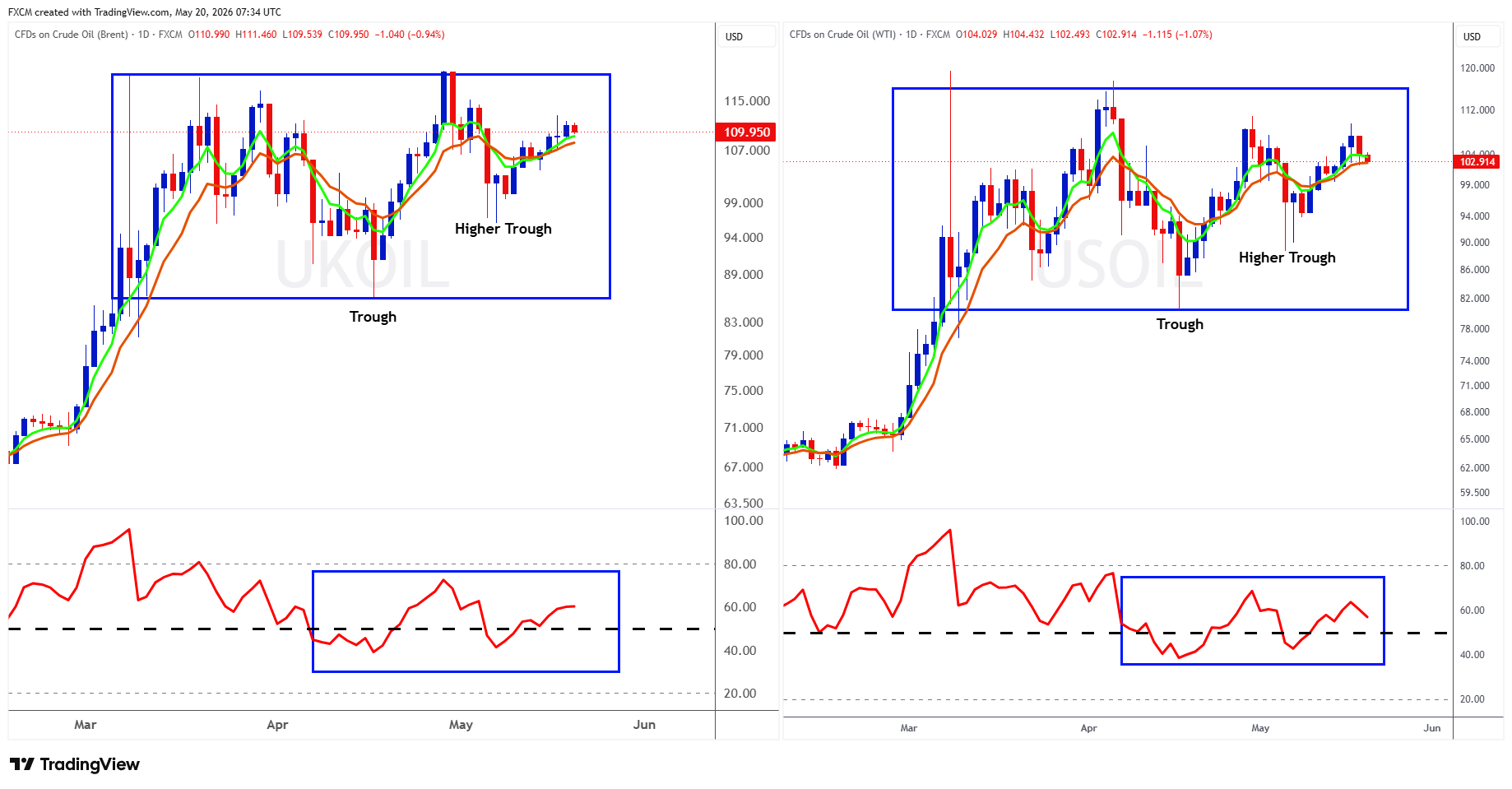
UKOil and USOil remain locked in consolidation patterns, although both charts have formed higher troughs, suggesting there is still some underlying support for oil prices. For now, however, consolidation remains the dominant theme. A break above $120 would signal a resolution of the range and suggest the broader uptrend is resuming.
From here, the RSI remains an important indicator to watch. If it continues to churn around the 50 level, that would reinforce the idea that the market is still consolidating. However, a sustained move above 50 would point to strengthening positive momentum and increase the likelihood of an upside breakout. Conversely, if the RSI falls below 50 and stays there, it would suggest oil prices are coming under pressure.
At present, the combination of higher troughs and RSI readings holding above 50 keeps the risk tilted towards higher oil prices, at least until the charts prove otherwise.
Fundamental Perspective
Fundamentally, the oil market remains caught between severe supply-side disruption and mounting concerns about global growth. The ongoing conflict involving Iran and the continued disruption to shipping through the Strait of Hormuz, through which roughly 20% of global oil flows, has kept a substantial geopolitical risk premium embedded in crude prices.
Tanker traffic remains heavily constrained, freight rates are elevated, and OPEC supply has been impacted, all of which continue to support the market. At the same time, the demand outlook is deteriorating.
The IEA's latest Oil Market Report now expects global oil demand to contract in 2026 as high energy costs and weaker economic conditions weigh on consumption. That leaves the oil market in an unusually fragile position: supply fears continue to underpin prices, but persistently high prices themselves increasingly threaten future demand and global growth.
The USDOLLAR
Technical Analysis
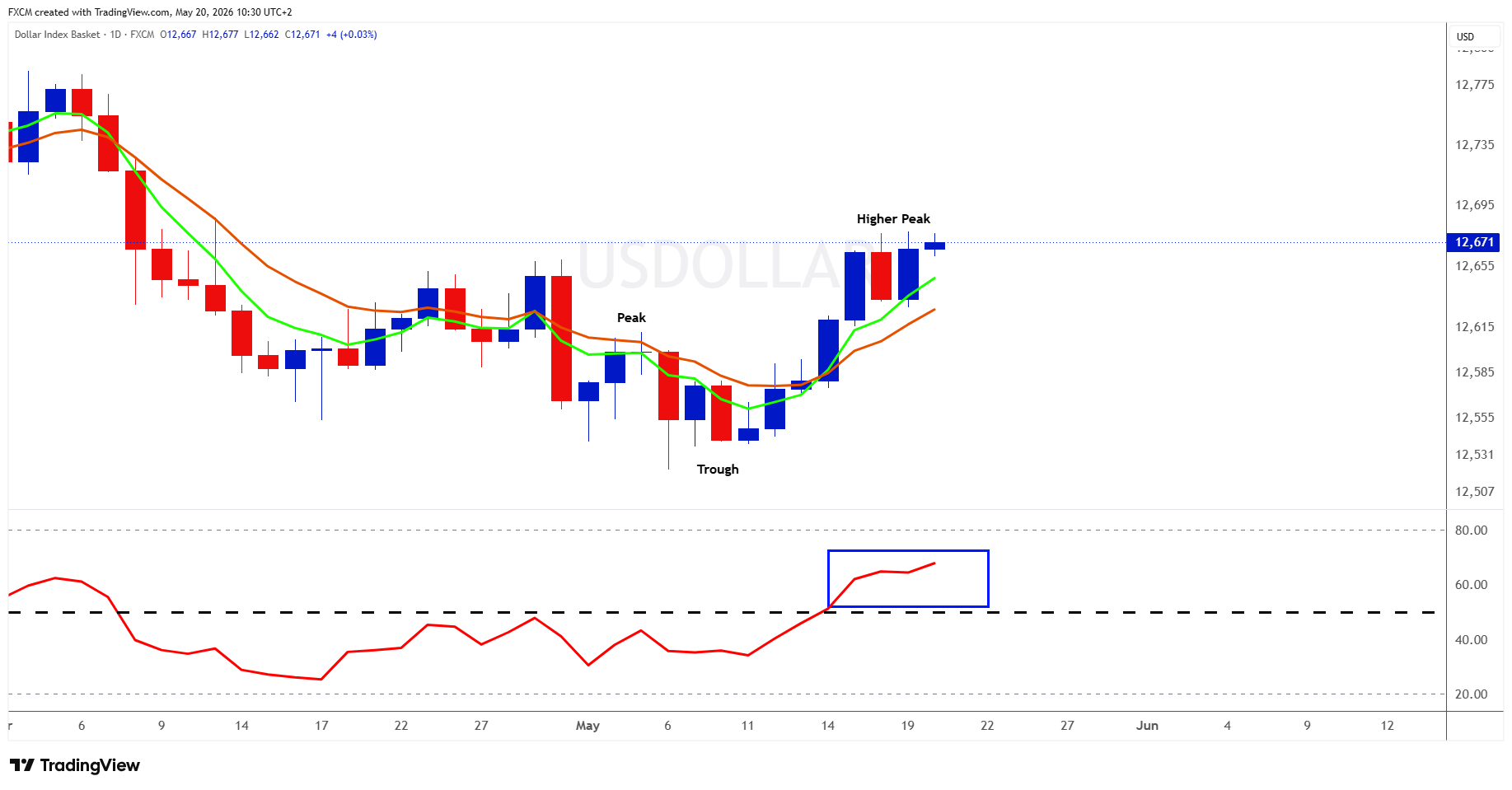
The USDOLLAR chart's momentum has shifted since last week. The greenback has formed a higher peak, while its RSI has moved above 50 (blue rectangle), suggesting underlying momentum has turned positive. Its EMAs have also crossed bullishly and are beginning to show both angle and separation, which is typically considered a constructive formation.
The longer the RSI remains above 50, the greater the likelihood of further upside in the greenback. However, if the RSI fails to hold current levels and drops back below 50, it would suggest that the positive momentum is beginning to fade.
Fundamental Perspective
The USDOLLAR has regained momentum as elevated oil prices and widening inflation pressures push Treasury yields higher and reinforce expectations that the Federal Reserve will keep interest rates elevated for longer.
The ongoing disruption around the Strait of Hormuz and persistently firm crude prices are increasingly being viewed as a broader inflationary force rather than a temporary energy shock, lifting concerns around transport, manufacturing, and consumer costs.
As a result, US bond yields have risen sharply in recent weeks as investors reassess the outlook for inflation and monetary policy. Higher yields continue to support the dollar by improving the relative attractiveness of US assets, while geopolitical tensions involving Iran have also strengthened safe-haven demand for the greenback.
At the same time, slowing global growth expectations, particularly outside the US, are reinforcing the dollar's relative strength, leaving the currency supported by a combination of rising yields, inflation concerns, and defensive capital flows.
Some Currencies to Keep an Eye On
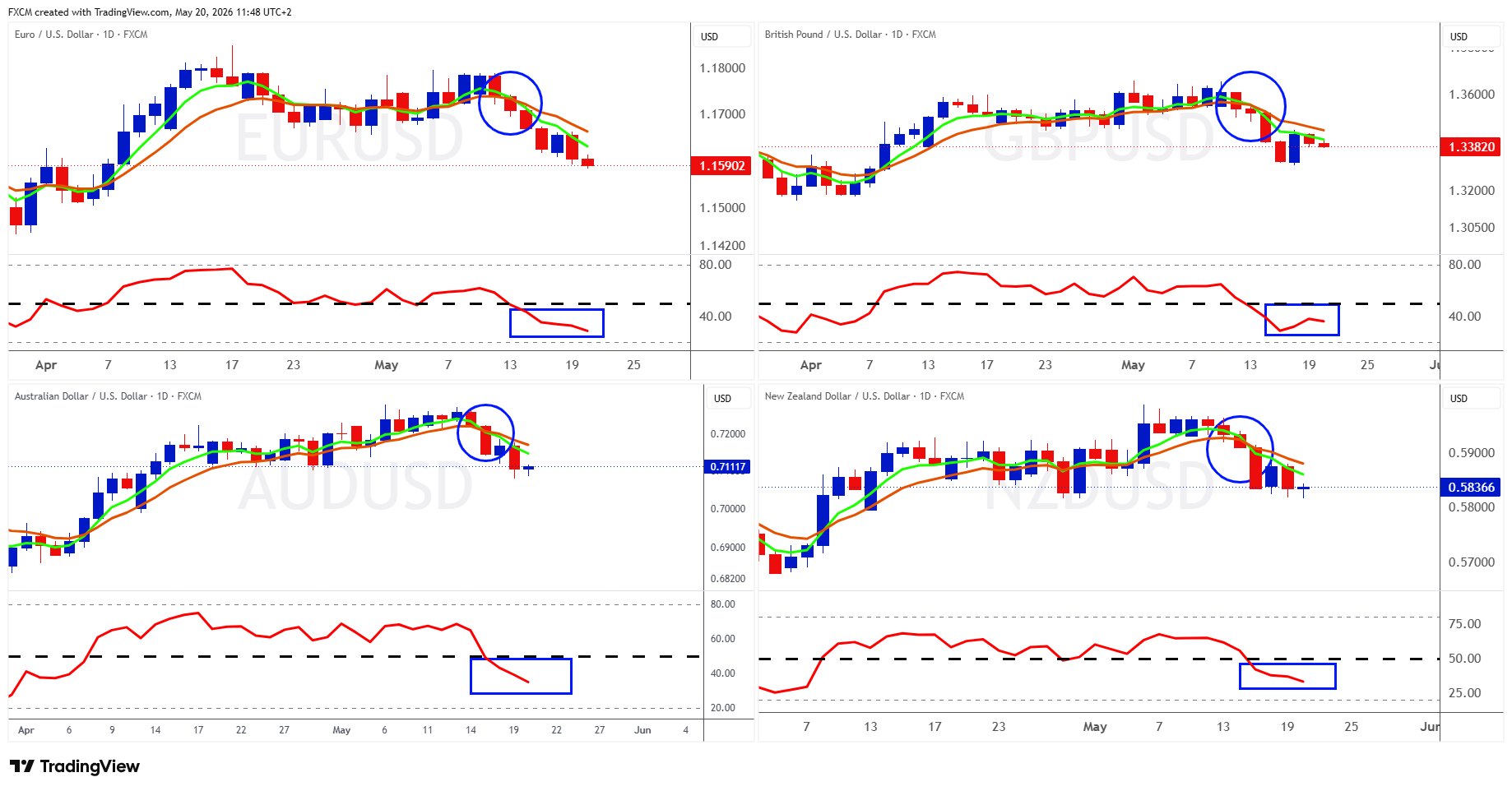
Here we see EURUSD in the top left corner, GBPUSD in the top right, AUDUSD at the bottom left, and NZDUSD in the bottom right. Given the increasingly constructive momentum in the USDOLLAR, it is little surprise to see the EMAs on these forex pairs crossing lower while their respective RSIs have fallen below 50. In other words, a large part of the recent movement is being driven by dollar strength, which itself is being supported by rising Treasury yields, persistently elevated oil prices, and the Federal Reserve's increasingly hawkish stance.
We will continue to monitor the respective indicators closely, but as long as the RSIs remain below 50, downward pressure is likely to persist across these pairs. Conversely, if there is a meaningful shift in the fundamental momentum behind the USDOLLAR, it is likely to have a significant impact on these currency pairs going forward.
Gold
Technical Analysis
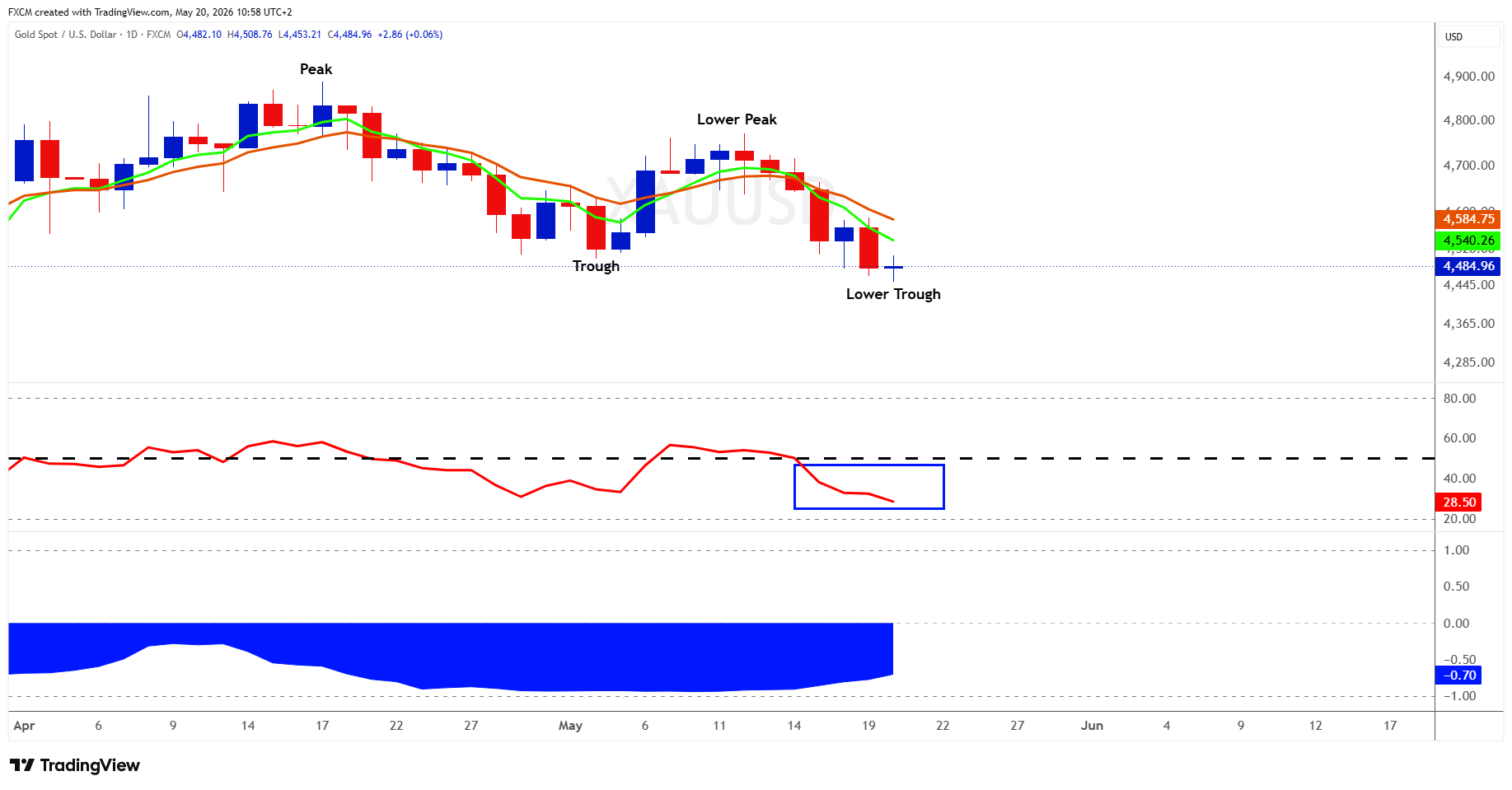
Gold's chart has also changed character over the course of the week. XAUUSD has now formed a lower peak followed by a lower trough on the daily chart, placing the metal in a short-term downtrend. Its RSI has also fallen below 50, suggesting that underlying momentum has shifted to the downside.
Gold's correlation with UKOil remains strongly inverse at around -70%. This suggests that the longer oil prices remain elevated, the greater the pressure likely to be exerted on the precious metal.
Fundamental Perspective
Fundamentally, gold is facing pressure as rising US Treasury yields and a strengthening dollar outweigh traditional safe-haven demand.
Elevated oil prices and ongoing disruption around the Strait of Hormuz are increasingly feeding broader inflation concerns, reinforcing expectations that the Federal Reserve will keep interest rates higher for longer. That has pushed Treasury yields sharply higher and strengthened the dollar, both of which are typically negative for non-yielding assets like gold.
While geopolitical tensions involving Iran would normally provide stronger support for the precious metal, the current market environment is instead being dominated by rising real yields and tighter monetary policy expectations.
As a result, gold remains trapped between inflationary and geopolitical forces that would usually be supportive, and the powerful headwind created by higher yields and a firmer US dollar.
Index in Focus: JPN225
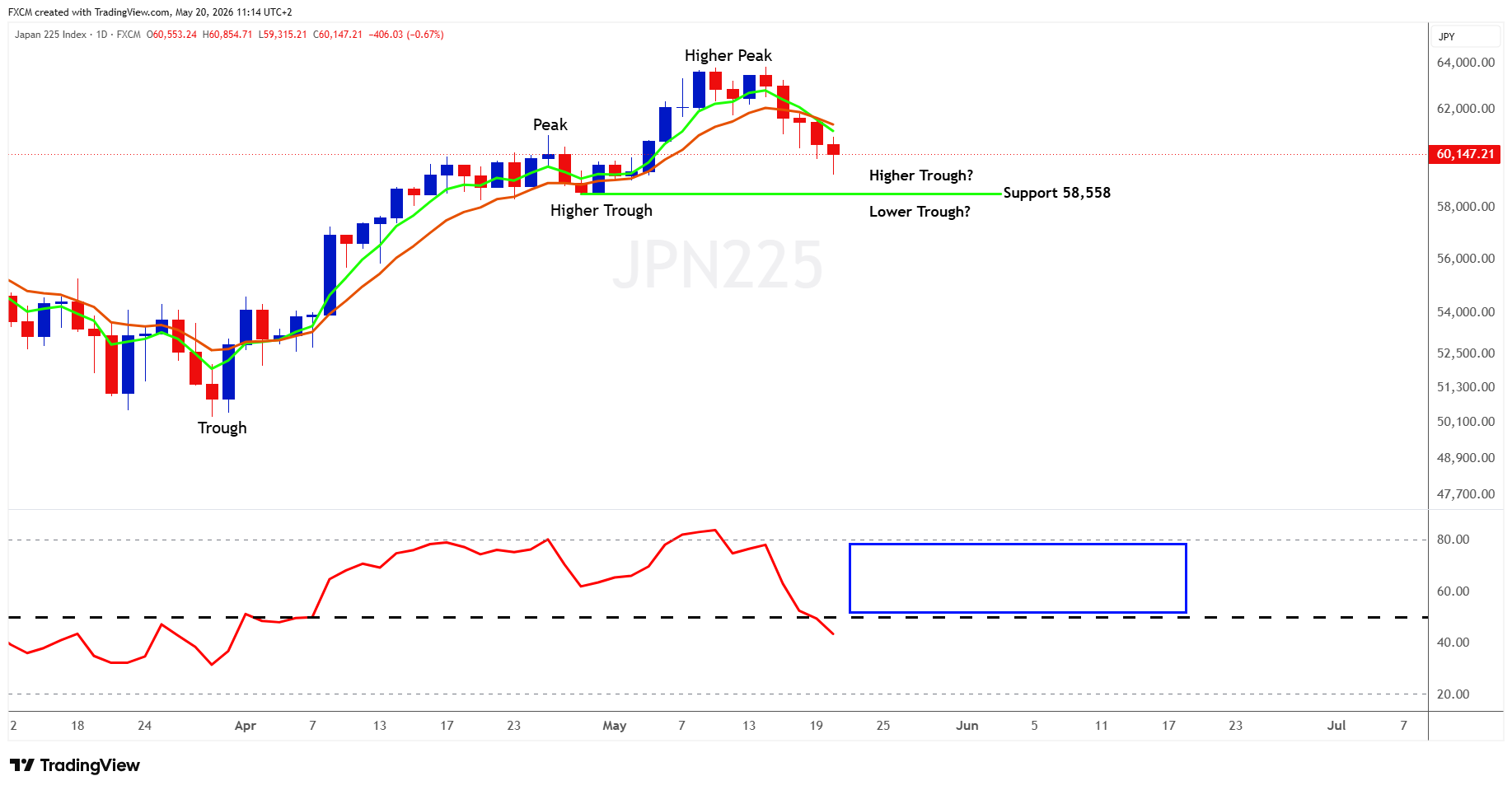
Technical Analysis
The JPN225 index has formed a higher trough followed by a higher peak on the daily chart, keeping the broader uptrend intact. However, price action over the past two weeks has shown some degree of pullback.
The key support level to watch is 58,558. If the index stabilises above this level, it will form the next higher trough in the series, reinforcing the bullish structure. A break below 58,558, however, would create a lower trough and signal a break in the daily uptrend.
Another higher trough would provide a solid base for the next leg higher and, if the RSI moves back above 50 and holds, it will increase the likelihood of another higher peak forming in the trend. That remains the more constructive scenario. However, if the RSI continues to hold below 50, the JPN225 is likely to face near-term momentum headwinds.
Fundamental Perspective
Fundamentally, the JPN225 continues to be supported by strong corporate earnings, AI-related demand, and ongoing corporate governance reforms, although rising global bond yields and shifting monetary policy expectations are beginning to create near-term headwinds.
Japanese exporters continue to benefit from a relatively weak yen, supporting earnings across major industrial and technology sectors, while foreign investors remain attracted to improving shareholder returns and comparatively attractive valuations.
At the same time, elevated oil prices and broader inflation pressures are pushing global yields higher and increasing expectations that the Bank of Japan could continue gradually normalising policy as inflation and wage growth remain firm.
While tighter monetary policy could create some pressure on equity valuations after the index's strong rally, the broader longer-term backdrop for Japanese equities remains constructive, supported by structural reform, technology demand, and improving domestic economic conditions.

Russell Shor
Senior Market Strategist
Russell Shor is a Senior Market Strategist at FXCM, having been promoted to the role in 2025 in recognition of his depth of insight and consistent delivery of high-impact market analysis. He originally joined FXCM in October 2017 as a Senior Market Specialist.
Russell holds an Honours Degree in Economics from the University of South Africa, is a certified FMVA®, and a full member of the Society of Technical Analysts (UK). With over 20 years of experience in financial markets, his work is renowned for its clarity, precision, and strategic value across asset classes.

Any opinions, news, research, analyses, prices, other information, or links to third-party sites contained on this website are provided on an "as-is" basis, as general market commentary and do not constitute investment advice. The market commentary has not been prepared in accordance with legal requirements designed to promote the independence of investment research, and it is therefore not subject to any prohibition on dealing ahead of dissemination. Although this commentary is not produced by an independent source, FXCM takes all sufficient steps to eliminate or prevent any conflicts of interests arising out of the production and dissemination of this communication. The employees of FXCM commit to acting in the clients' best interests and represent their views without misleading, deceiving, or otherwise impairing the clients' ability to make informed investment decisions. For more information about the FXCM's internal organizational and administrative arrangements for the prevention of conflicts, please refer to the Firms' Managing Conflicts Policy. Please ensure that you read and understand our Full Disclaimer and Liability provision concerning the foregoing Information, which can be accessed here.