
Oil and Gold in the Shadow of War

Key Points
- Quick de-escalation: Oil falls toward $70–$75, gold eases.
- Prolonged tension: Oil holds $80–$90, gold supported.
- Major supply shock: Hormuz disruption could push oil above $100.
How the Iran conflict is reshaping commodity markets
Commodity markets have slipped back into a familiar pattern: geopolitics is driving the narrative again. The latest escalation in the Middle East has quickly shifted the outlook for both energy and safe-haven assets. Oil prices have jumped as traders factor in potential supply disruptions, while gold has strengthened as investors look for safety.
Although both markets are reacting to the same catalyst, the forces behind the moves are quite different. Oil reflects the possibility of physical supply shocks. Gold, by contrast, reflects the financial anxiety that tends to accompany geopolitical instability. Together they are offering one of the clearest signals of how global markets are interpreting the conflict.
At the moment, the relationship between oil and gold has become one of the key macro indicators investors are watching.
Oil: Geopolitics returns to the market
Oil markets reacted quickly once hostilities between Iran and the US-Israel alliance intensified. Brent crude has moved up to around $83 per barrel, while the US benchmark WTI has been trading near $77. That represents a notable rise from the levels seen before the conflict escalated.
What we are seeing is the reappearance of the classic geopolitical risk premium in oil. In commodity markets, prices often move well before supply is actually disrupted. When traders believe a shortage might occur, they begin pricing that possibility into the market immediately.
Much of the concern centres on the Strait of Hormuz, the narrow shipping corridor that connects Gulf oil producers to global markets. Roughly one-fifth of the world's oil and LNG exports pass through the strait, making it one of the most important energy chokepoints on the planet.
Since the conflict intensified, maritime traffic in the area has slowed significantly as shipping companies reassess the security risks. Reports of tanker attacks, rising insurance costs and military warnings have forced vessels to delay voyages or take longer routes.
According to Reuters, roughly 300 ships have been stalled in the region as a result of the uncertainty. At the same time, refinery shutdowns and export interruptions have begun appearing across parts of the Gulf.
Supply concerns have also grown because of developments elsewhere in the region. Iraq has reportedly reduced output by around 1.5 million barrels per day, and analysts warn that as much as 3.3 million barrels per day could be at risk if disruptions worsen.
Another flashpoint occurred on 2 March when Iranian drones targeted the Ras Tanura refinery in Saudi Arabia, the kingdom's largest refining facility. Although the drones were intercepted and the damage appears limited, Saudi Aramco temporarily halted operations as a precaution, adding further tension to the oil market.
For traders, the issue is not simply confirmed supply losses. It is the possibility that the world's most important oil corridor could remain unstable for an extended period.
In practical terms, this means oil prices now include a geopolitical premium that analysts estimate to be somewhere between $10 and $20 per barrel.
Inflation risks and the broader economy
Higher oil prices rarely stay confined to the energy market. They ripple across the entire economy.
Fuel costs feed directly into transportation, manufacturing and household energy bills. As a result, rising oil prices tend to push global inflation higher.
Analysts at Goldman Sachs estimate that if crude were to climb toward $100 per barrel, global economic growth could fall by roughly 0.4 percentage points.
That may sound modest, but historically energy shocks have had an outsized impact on financial markets. Higher fuel costs squeeze corporate margins and reduce consumers' spending power, particularly in countries that rely heavily on imported energy.
Perhaps more importantly, rising oil prices complicate the decisions facing central banks.
Policymakers had been considering interest-rate cuts in 2026 as growth slowed in several major economies. A sustained rise in energy prices could force central banks to delay those plans, keeping policy tighter for longer.
That dynamic is especially important for gold.
Gold: the financial refuge
If oil reflects the physical risks created by war, gold reflects the psychological ones.
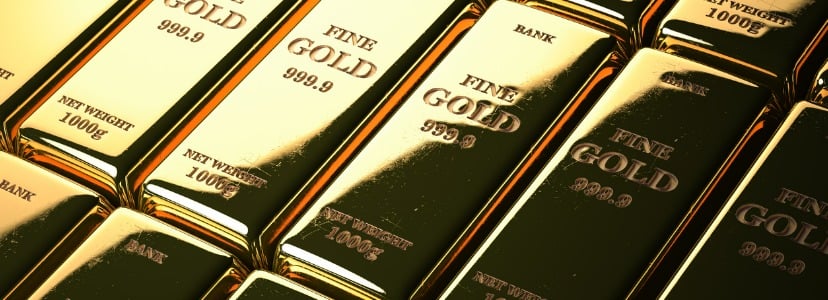
The metal jumped sharply after the strikes involving Iran as investors moved toward traditional safe-haven assets. Spot gold is currently trading near $5,170 per ounce after briefly pushing above $5,400 earlier in the week during the height of market anxiety.
Safe-haven demand has been the primary driver. When geopolitical tensions rise, investors often shift money away from risk assets and into instruments that are perceived as stores of value. Gold has historically been at the centre of that process.
However, the rally has not been entirely straightforward. Gold has also faced pressure from a stronger US dollar and expectations that central banks could keep interest rates elevated.
This tension highlights one of gold's defining characteristics. The metal benefits from fear and uncertainty, but higher real interest rates tend to limit its upside.
At the moment, geopolitical concerns appear to be outweighing those monetary headwinds.
Markets adjusting to a new geopolitical reality
Perhaps the most important feature of the current commodity environment is not the exact price levels but the return of geopolitics as a central market driver.
For much of the past decade, oil prices were largely shaped by fundamentals such as OPEC production decisions, US shale output and shifts in global demand. Gold was influenced mainly by real yields and currency movements.
The Iran conflict has begun to shift that balance.
Energy security has once again become a strategic issue. Shipping routes, refinery infrastructure and tanker safety now matter as much as production quotas or inventory data.
The broader effects are already visible in financial markets. Currency volatility has picked up, equity markets have struggled to establish a clear direction, and investors have begun rotating toward more defensive assets.
What happens next
Looking ahead, the path for both oil and gold will depend heavily on how the conflict evolves.
One possibility is a relatively quick de-escalation. If diplomatic efforts lead to a ceasefire in the coming weeks, the geopolitical premium currently embedded in oil prices could fade rapidly. Brent might drift back toward the $70–$75 range, while gold could ease as investors return to risk assets.
Another scenario involves a prolonged regional conflict that threatens shipping routes but does not significantly damage oil infrastructure. In that case, oil could remain in the $80–$90 range as markets continue pricing in uncertainty. Gold would likely remain supported by ongoing geopolitical tension.
The most disruptive outcome would involve a major supply shock, such as a sustained closure of the Strait of Hormuz or significant damage to Gulf oil facilities. Because the strait handles around one-fifth of global energy flows, a prolonged disruption could push oil prices well above $100 per barrel.
Such a scenario would likely trigger higher inflation and renewed stress in global equity markets. Gold, meanwhile, would probably rally strongly as investors seek financial protection.
Final perspective
The current conflict is a reminder that commodity markets remain deeply tied to geopolitics. Oil is responding to fears that global energy supplies could be disrupted, while gold is reflecting the rising demand for safety in uncertain times.
For now, both markets appear to be balancing in an uneasy equilibrium. Oil is elevated but not yet in full crisis territory. Gold remains supported by geopolitical anxiety but restrained by expectations around monetary policy.
Ultimately, the direction of both markets in the coming weeks will depend less on traditional economic fundamentals and more on developments in the Middle East
Until the geopolitical picture becomes clearer, oil and gold will remain two of the most sensitive indicators of global risk.
References

Russell Shor
Senior Market Strategist
Russell Shor is a Senior Market Strategist at FXCM, having been promoted to the role in 2025 in recognition of his depth of insight and consistent delivery of high-impact market analysis. He originally joined FXCM in October 2017 as a Senior Market Specialist.
Russell holds an Honours Degree in Economics from the University of South Africa, is a certified FMVA®, and a full member of the Society of Technical Analysts (UK). With over 20 years of experience in financial markets, his work is renowned for its clarity, precision, and strategic value across asset classes.



Any opinions, news, research, analyses, prices, other information, or links to third-party sites contained on this website are provided on an "as-is" basis, as general market commentary and do not constitute investment advice. The market commentary has not been prepared in accordance with legal requirements designed to promote the independence of investment research, and it is therefore not subject to any prohibition on dealing ahead of dissemination. Although this commentary is not produced by an independent source, Friedberg Direct, FXCM or its affiliates takes all sufficient steps to eliminate or prevent any conflicts of interests arising out of the production and dissemination of this communication. The employees of Friedberg Direct and FXCM commit to acting in the clients' best interests and represent their views without misleading, deceiving, or otherwise impairing the clients' ability to make informed investment decisions. For more information about the Friedberg Direct's internal organizational and administrative arrangements for the prevention of conflicts, please refer to the Firms' Managing Conflicts Policy. Please ensure that you read and understand our Full Disclaimer and Liability provision concerning the foregoing Information, which can be accessed here.**