
Hang Seng firm but China deflation risks persist


HKG33 Analysis
China CPI cooled to 0.2% in January, reversing the gains of the previous two months and sustaining deflation concerns. Domestic consumption remains weak amid macroeconomic uncertainty and lingering negative wealth effects from the distressed property market. Meanwhile, intense price competition and excess supply that weighs on corporate profits, keept factory gate prices in deflationary territory. The producer price index (PPI) has stayed in the red (-1.4%) for more than three years.
These forces weigh on HKG33 and leave it vulnerable to sub-EMA200 moves that could open the door to deeper declines. However, the index retains upside momentum and the ability to push to new multi-year highs.
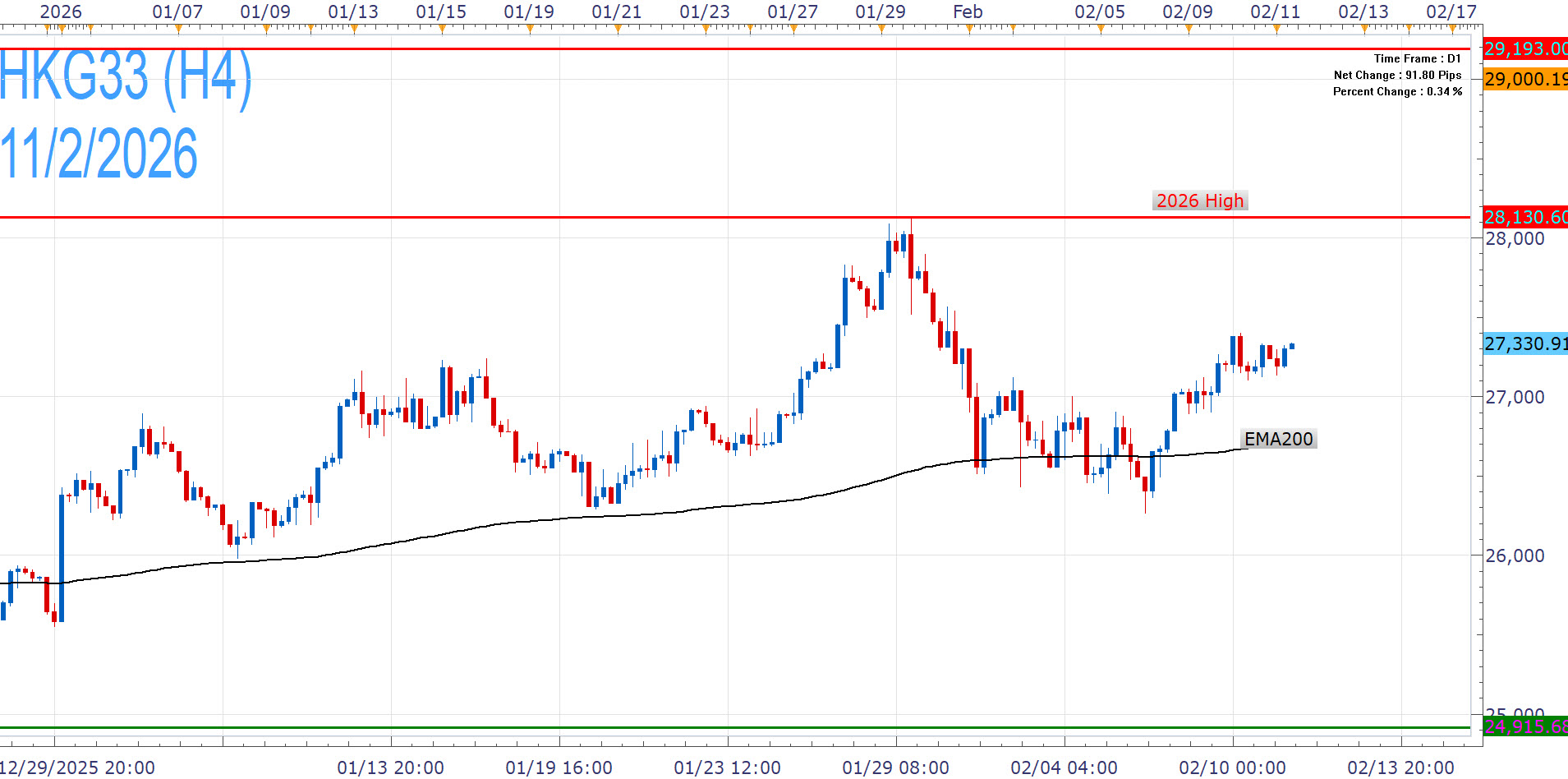
China's tech prowess and AI progress continue to support the rally, with heavyweights such as Alibaba and Baidu coming off a strong year. Underscoring this, Alibaba shares rose today after the company unveiled an AI model designed to power robotics, expanding its reach in the sector.
The trade détente with the US supports the economy after China achieved its 5% GDP target in 2025, while exports rose 6.6% in December, highlighting resilience and diversification. Consumer prices cooled partly due to unfavourable year-on-year comparisons, as the Lunar New Year fell in late January in 2025 versus February in 2026. Producer prices remain in deflation but pressures are easing. Beijing has been working to boost domestic demand and curb price competition and overcapacity, with the latest inflation data suggesting these efforts are gaining traction.

Nikos Tzabouras
Senior Financial Editorial Writer
Nikos Tzabouras is a graduate of the Department of International & European Economic Studies at the Athens University of Economics and Business. With extensive experience in market analysis and a strong foundation in international relations, he brings a unique perspective to financial markets. Nikos emphasizes not only technical analysis but also on fundamentals and the growing influence of geopolitics on financial trends.
As a Senior Financial Editorial Writer, he delivers comprehensive and forward-looking insights across a wide range of asset classes, including equities, commodities, and currencies. His work explores how macroeconomic events, political developments, and global policies impact market dynamics, providing readers with a deeper understanding of both short-term movements and long-term trends.



Any opinions, news, research, analyses, prices, other information, or links to third-party sites contained on this website are provided on an "as-is" basis, as general market commentary and do not constitute investment advice. The market commentary has not been prepared in accordance with legal requirements designed to promote the independence of investment research, and it is therefore not subject to any prohibition on dealing ahead of dissemination. Although this commentary is not produced by an independent source, Friedberg Direct, FXCM or its affiliates takes all sufficient steps to eliminate or prevent any conflicts of interests arising out of the production and dissemination of this communication. The employees of Friedberg Direct and FXCM commit to acting in the clients' best interests and represent their views without misleading, deceiving, or otherwise impairing the clients' ability to make informed investment decisions. For more information about the Friedberg Direct's internal organizational and administrative arrangements for the prevention of conflicts, please refer to the Firms' Managing Conflicts Policy. Please ensure that you read and understand our Full Disclaimer and Liability provision concerning the foregoing Information, which can be accessed here.**