
BoJ hikes rates again: what it means for the Nikkei


BoJ accelerates tightening
The Bank of Japan raised rates by 25 basis points to around 1.25%, noting it will continue to adjust rates as it tries to stabilise inflation [1]. This marked a step up in the cadence of its hiking cycle, with 135 basis points of tightening since the March 2024 pivot marking the fastest pace since 1990.
Policymakers retain strong justification to proceed with further monetary tightening. Elevated crude prices, expansive fiscal stimulus and the AI infrastructure boom continue to catalyse corporate profits and wage growth, entrenching domestic inflation. Simultaneously, persistent yen weakness exacerbates imported cost pressures, providing an additional impetus for rate adjustments aimed at bolstering the currency. While external energy shocks pose economic headwinds, their impact is being cushioned by targeted fiscal measures and robust AI-driven demand. Second-quarter GDP expanded by a solid 1.4%, affording officials the economic leeway to pursue policy normalisation without immediate growth-related constraints.
However, the decision was not unanimous, with two members voting in favour of a hold in a 7-2 split, showing that an accelerated pace of hikes may prove contentious. Governor Ueda spoke of a new phase in monetary policy and did not rule out back-to-back hikes or larger moves during his press conference, but there was no overtly hawkish signal overall.
The bank has traditionally maintained a gradual approach to policy normalisation and will have good reasons to stay cautious. Aggressive rate escalation risks conflicting with government fiscal priorities while adding fuel to the ongoing bond yield rally. In an economy operating with a gross debt-to-GDP ratio of 204.4% [2], higher yields severely inflate sovereign debt-servicing burdens. Furthermore, growth risks linger, compounded by geopolitical friction in the Middle East and Japan's heavy reliance on regional energy imports.
Higher rates a headwind for the stock market
Higher interest rates can weigh on economic activity and increase borrowing costs for households and corporations, creating an unfavourable environment for equities that had grown accustomed to cheap money. Today's decision likely takes rates out of accommodative territory as the neutral rate is estimated to start just above 1%, with BoJ member Kazuyuki Masu recently placing the neutral range at 1.1%-2%.[3]
At the same time, the higher rates and elevated yields environment stokes fiscal worries that could erode confidence in Japanese assets. The government has added another ¥3.1 trillion to an already record FY26 budget as it seeks to support households and key industries, putting investors on edge.
The most aggressive tightening since 1989-1990 draws uncomfortable historical parallels. During that cycle, which pushed rates to 6%, the Nikkei erased more than 30% from its record peak and proceeded to extend its decline, ushering in Japan's "Lost Decades". However, the similarities with that period are limited. This time around, interest rates are merely at the cusp of neutral and even at a quarterly adjustment cadence, it is a very long road to restrictive territory. What's more, the central bank continues to view financial conditions as accommodative even after today's hike. Although the monetary stance can affect equity markets, their trajectory has more potent drivers.
Yen implications for the Nikkei
The Japanese stock market has generally benefitted from yen weakness and its effect on businesses and investment flows. The Nikkei is heavily weighted toward export-driven corporations, with a weaker currency making their products more competitive abroad and boosting their balance sheets. Corporate titans like Toyota and Sony have highlighted the positive impact from foreign exchange.
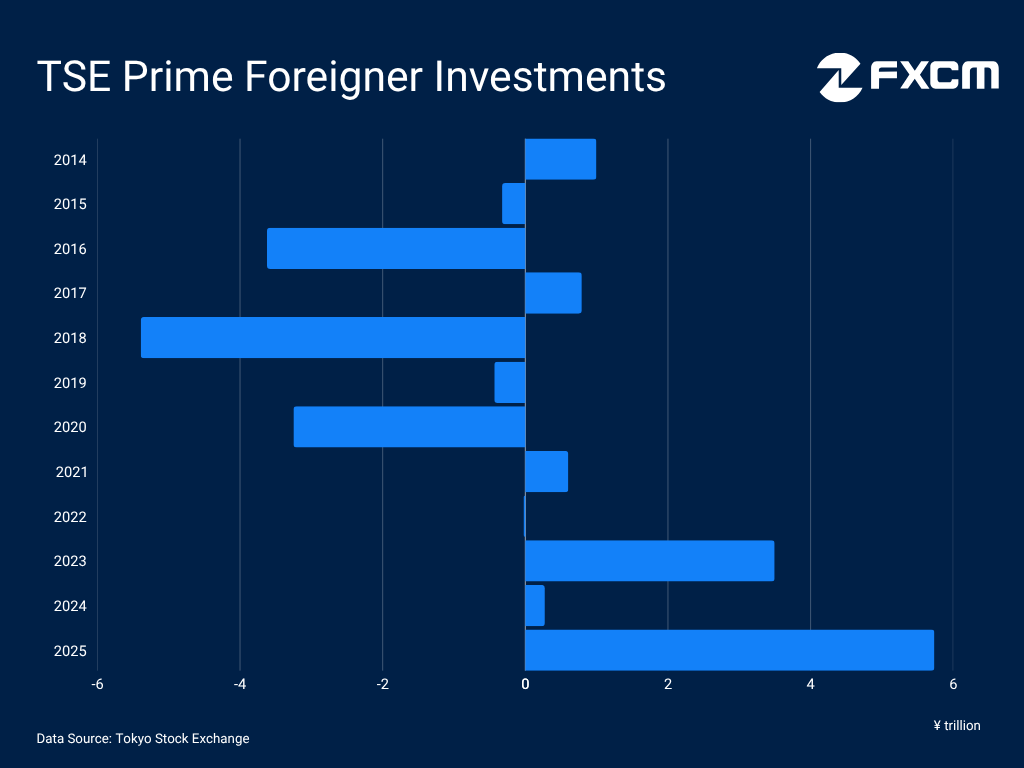
At the same time, a depreciated yen improves the value proposition of Japanese equities, lowering the cost of entry. Last year, when USD/JPY stayed close to multi-decade highs, foreigners poured a net ¥5.7 trillion into the TSE Prime [4]. So far in 2026, foreigners are net buyers to the tune of ¥9.28 trillion. This enduring appeal is heavily supported by structural reforms aimed at improving corporate governance, capital efficiency and valuation. Authorities continue to push these measures forward, rolling out updated implementation guidelines this year, with 93% of Prime-listed companies now disclosing specific action plans in accordance with these standards.[5]
The yen could remain under pressure as today's BoJ hike was preceded by a Fed increase, sustaining a vast rate differential and the carry trade. However, the decision marks an acceleration in the pace of tightening that could help the currency stabilise, particularly as recent forceful FX interventions have built up some deterrence against yen shorts. Crucially, Japan enters the Silver Week holiday period, which provides opportune timing for further FX operations as typically thinner market liquidity can amplify their impact.
A stronger yen could have negative ramifications by denting the appeal of equities to foreign investors, though the very depreciated level was also problematic as it eroded gains on unhedged positions. It could also weigh on exporters like automakers, but would simultaneously reduce import costs for energy and raw materials. Ultimately, the exchange rate has only a marginal impact on the Nikkei's broader outlook.
AI is the ultimate arbitrator for the Nikkei
Japan has a world-class chip supply chain positioned at the heart of AI proliferation, boosting economic activity. Semiconductor shipments grew at a faster clip of 52.3% y/y, rising for a twelfth straight month and lifting overall exports. AI demand is also boosting corporate profits, which soared 24.6% y/y in the second quarter, driven by the electronics and computer manufacturing sector.[6]
Companies like Advantest and Kioxia are direct enablers and beneficiaries of the physical AI buildout, supporting the Nikkei's outlook. With the rise of inference and Agentic AI boosting compute demand and hyperscalers committing massive capex for infrastructure, this powerful tailwind could persist.
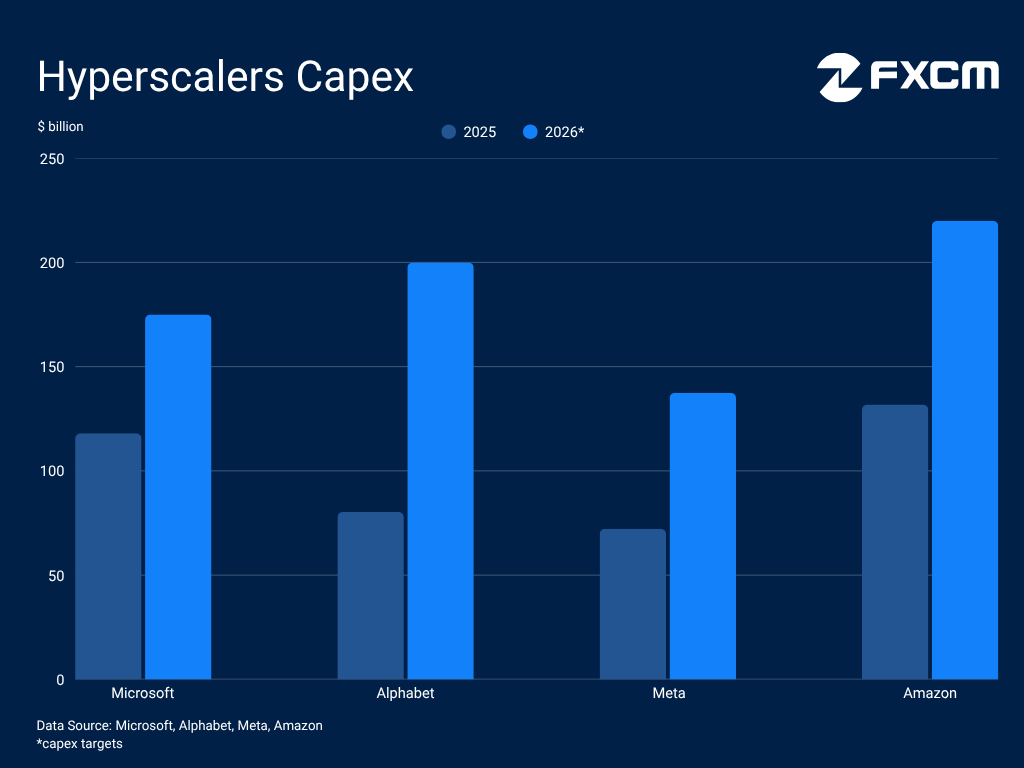
However, the AI story is far from straightforward, with bubble fears ebbing and flowing. The Middle East conflict creates physical hurdles for energy-intensive chip manufacturing, raising the cost of building and running data centres. Circular financing and debt-funded investments represent another vulnerability. The latest unease arose from Anthropic CEO Dario Amodei's call for a slowdown in AI development and stricter guardrails, sparking anxiety over escalating expenses and potential curbs on capital expenditure that could dampen demand across the chip supply chain. Still, chip makers do not see supply catching up with demand any time soon, while any near-term moderation may actually help monetisation and margins.
Nikkei outlook: weighing monetary tightening against structural tailwinds
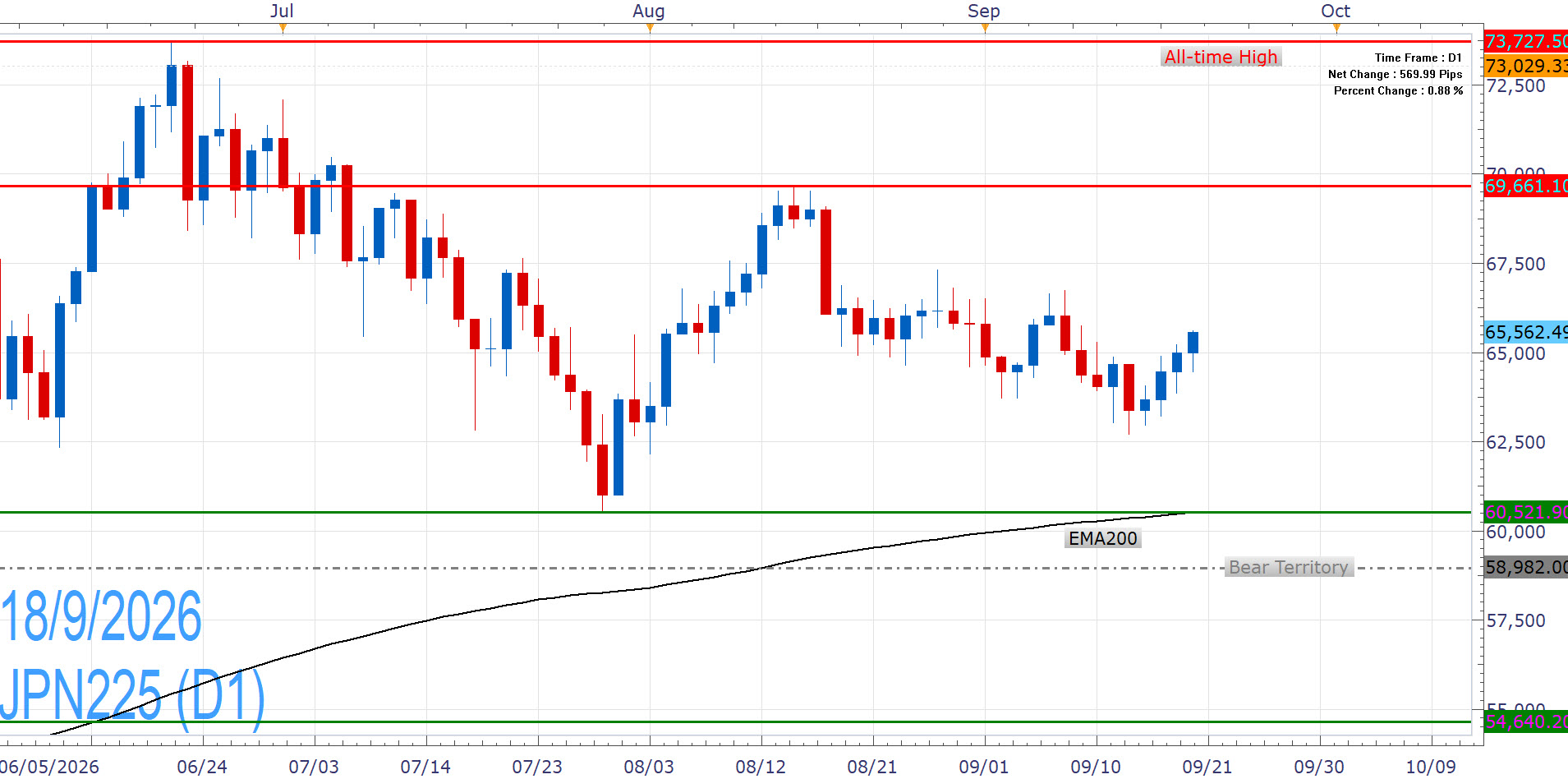
Today's rate hike by the Bank of Japan marks a pivotal moment for policy normalisation, representing the fastest tightening cycle since 1990 and stirring memories of Japan's "Lost Decades". The Nikkei faces a challenging environment from higher rates, nuanced currency dynamics, worrying deficit and lingering macro-geopolitical uncertainty. This leaves JPN225 vulnerable to pullbacks and a bear market, but the broader bullish outlook remains intact above the EMA200, keeping the road to new all-time highs wide open.
Historical parallels with the 1990s offer limited relevance to today's economic reality. The Nikkei's strength is well-founded in structural drivers, corporate governance reforms and Japan's integral role in the physical AI buildout. A few more rate hikes or yen appreciation cannot cancel out a structural AI supercycle. As long as the AI story holds, the Nikkei can keep pushing higher.

Nikos Tzabouras
Senior Financial Editorial Writer
Nikos Tzabouras is a graduate of the Department of International & European Economic Studies at the Athens University of Economics and Business. With extensive experience in market analysis and a strong foundation in international relations, he brings a unique perspective to financial markets. Nikos emphasizes not only technical analysis but also on fundamentals and the growing influence of geopolitics on financial trends.
As a Senior Financial Editorial Writer, he delivers comprehensive and forward-looking insights across a wide range of asset classes, including equities, commodities, and currencies. His work explores how macroeconomic events, political developments, and global policies impact market dynamics, providing readers with a deeper understanding of both short-term movements and long-term trends.
References
| Retrieved 18 Sep 2026 https://www.boj.or.jp/en/mopo/mpmdeci/mpr_2026/k260918a.pdf | |
| Retrieved 18 Sep 2026 https://www.imf.org/external/datamapper/GGXWDG_NGDP@WEO/JPN | |
| Retrieved 18 Sep 2026 https://www.boj.or.jp/en/about/press/koen_2026/data/ko260910a1.pdf | |
| Retrieved 18 Sep 2026 https://www.jpx.co.jp/english/markets/statistics-equities/investor-type/00-01.html | |
| Retrieved 18 Sep 2026 https://www.jpx.co.jp/english/news/1020/20260428-01.html | |
| Retrieved 18 Sep 2026 https://www.mof.go.jp/english/pri/reference/ssc/r8.4-6.pdf |


Any opinions, news, research, analyses, prices, other information, or links to third-party sites contained on this website are provided on an "as-is" basis, as general market commentary and do not constitute investment advice. The market commentary has not been prepared in accordance with legal requirements designed to promote the independence of investment research, and it is therefore not subject to any prohibition on dealing ahead of dissemination. Although this commentary is not produced by an independent source, FXCM takes all sufficient steps to eliminate or prevent any conflicts of interests arising out of the production and dissemination of this communication. The employees of FXCM commit to acting in the clients' best interests and represent their views without misleading, deceiving, or otherwise impairing the clients' ability to make informed investment decisions. For more information about the FXCM's internal organizational and administrative arrangements for the prevention of conflicts, please refer to the Firms' Managing Conflicts Policy. Please ensure that you read and understand our Full Disclaimer and Liability provision concerning the foregoing Information, which can be accessed here.