
AUD/USD slips after unsurprising AU inflation rise

AUD/USD Analysis
Australian inflation did not provide any upside surprises and the monthly data came in slightly softer than expected, with March CPI at 4.7% y/y. However, this represents a substantial increase and the highest reading since September 2023, while first quarter inflation rose 4.1% y/y, the fastest pace in over two years. The report confirms the inflationary impact of the Middle East conflict and the ongoing energy price shock, with oil prices remaining elevated. The situation has also pushed inflation expectations to 5.9%, the highest in nearly four years, further enhancing upside risks.
The Reserve Bank of Australia acknowledged those prospects last month when it raised rates to 4.1%, expecting inflation to stay above the 2-3% target for longer than previously anticipated. Deputy Governor Hauser warned last month that interest rates may need to rise further to tame inflation and today's figures support the case for additional tightening at next week's meeting.
On the other hand, policymakers have noted risks to growth and may want to tread carefully. Despite its status as a major energy exporter, Australia still relies on refined oil imports, leaving the economy vulnerable to supply disruptions.
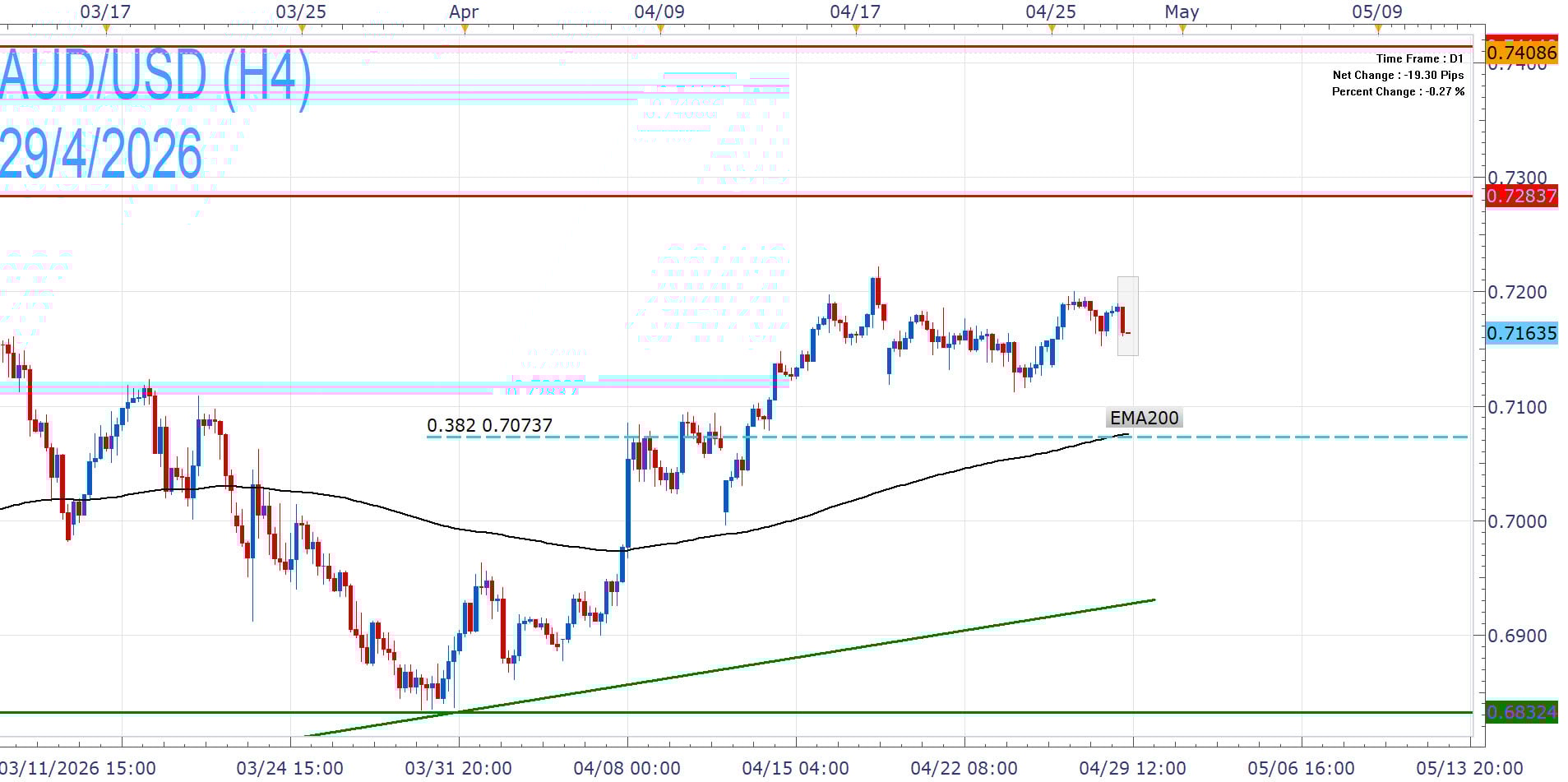
AUD/USD slipped after a not-as-bad-as-feared CPI report, with lingering risk aversion from geopolitical uncertainty continuing to support the USDOLLAR. This leaves the pair vulnerable to deeper pullbacks that would test the EMA200 and upside momentum.
However, holding above the EMA200 and the 38.2% Fibonacci level would reaffirm the bullish outlook and the case for new multi-year highs above 0.7284. The RBA's lead in tightening creates a favourable monetary policy differential that could continue to support the Aussie, though any dovish surprise next week could weigh. Markets are also focusing on tonight's Fed decision for the pair's next move.

Nikos Tzabouras
Senior Financial Editorial Writer
Nikos Tzabouras is a graduate of the Department of International & European Economic Studies at the Athens University of Economics and Business. With extensive experience in market analysis and a strong foundation in international relations, he brings a unique perspective to financial markets. Nikos emphasizes not only technical analysis but also on fundamentals and the growing influence of geopolitics on financial trends.
As a Senior Financial Editorial Writer, he delivers comprehensive and forward-looking insights across a wide range of asset classes, including equities, commodities, and currencies. His work explores how macroeconomic events, political developments, and global policies impact market dynamics, providing readers with a deeper understanding of both short-term movements and long-term trends.



Any opinions, news, research, analyses, prices, other information, or links to third-party sites contained on this website are provided on an "as-is" basis, as general market commentary and do not constitute investment advice. The market commentary has not been prepared in accordance with legal requirements designed to promote the independence of investment research, and it is therefore not subject to any prohibition on dealing ahead of dissemination. Although this commentary is not produced by an independent source, Friedberg Direct, FXCM or its affiliates takes all sufficient steps to eliminate or prevent any conflicts of interests arising out of the production and dissemination of this communication. The employees of Friedberg Direct and FXCM commit to acting in the clients' best interests and represent their views without misleading, deceiving, or otherwise impairing the clients' ability to make informed investment decisions. For more information about the Friedberg Direct's internal organizational and administrative arrangements for the prevention of conflicts, please refer to the Firms' Managing Conflicts Policy. Please ensure that you read and understand our Full Disclaimer and Liability provision concerning the foregoing Information, which can be accessed here.**