Airlines Take a Beating on Covid Jitters

The World Health Organization (WHO) warned of a newly found COVID-19 variant, sparking fresh fears sending stocks of major airline companies lower

Page 124 of 133
The World Health Organization (WHO) warned of a newly found COVID-19 variant, sparking fresh fears sending stocks of major airline companies lower


The GER30 gapped down on open today, as a risk-off sentiment prevails. The catalyst is covid-19 developments. In Europe, countries are starting to reintroduce restrictions to deal with rising infections. On Wednesday, Italy announced new Covid measures, and Germany narrowly avoided another lockdown, preferring to see if stricter Covid passport rules help alleviate the situation. Moreover, concerns over a new Covid variant have added to the fears. The B.1.1.529, or…
Risk-off mood dominates markets today, but the US Dollar fails to benefit, allowing the pair to push higher, reacting from Wednesday’s 2021 lows
Risk aversion was prevalent is the Asia-Pacific session, after WHO warned yesterday about a new COVID-19 variant, with the Japanese Yen emerging as the main beneficiary
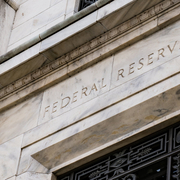
Various members of the US central bank have been making hawkish remarks lately, fueling the Dollar’s advance, while yesterday’s minutes form the last policy decision were also on the hawkish side
The pair has entered its fourth losing week and extends its losses today, despite some containment of the US Dollar’s strength
News of agreement for a three-party coalition on Wednesday, provided support to the German Index, but today’s economic data are not helpful
The Chinese firm reported its latest quarterly earnings on Tuesday, after the Hong Kong stock market closed, with the results disappointing investors and pushing the stock lower today
Weekly Chart Past Performance: Past Performance is not an indicator of future results. The chart above is FXCM's proxy for Brent, UKOil, on a weekly scale. From the mid-August low to the mid-October high, UKOil appreciated around 32%. We have used this impulse move for our reference trough (T) and reference peak (P). Since reaching P, UKOil has retraced to the 38.2% Fibonacci level (black horizontal). This level is currently…
The Reserve Bank of New Zealand (RBNZ) hiked rates for a second time in a row, bringing them to 0.75%, but the pair reacted lower, as the move was largely expected
The Chinese electric vehicle maker released solid financial results for the third quarter, earlier today, with the stock rallying at the beginning of trading in the US
Any opinions, news, research, analyses, prices, other information, or links to third-party sites contained on this website are provided on an "as-is" basis, as general market commentary and do not constitute investment advice. The market commentary has not been prepared in accordance with legal requirements designed to promote the independence of investment research, and it is therefore not subject to any prohibition on dealing ahead of dissemination. Although this commentary is not produced by an independent source, FXCM takes all sufficient steps to eliminate or prevent any conflicts of interests arising out of the production and dissemination of this communication. The employees of FXCM commit to acting in the clients' best interests and represent their views without misleading, deceiving, or otherwise impairing the clients' ability to make informed investment decisions. For more information about the FXCM's internal organizational and administrative arrangements for the prevention of conflicts, please refer to the Firms' Managing Conflicts Policy. Please ensure that you read and understand our Full Disclaimer and Liability provision concerning the foregoing Information, which can be accessed here.