
How do I Spread Bet with FXCM?
How do lots work when spread betting with FXCM?
When you spread bet with FXCM, your position size is expressed using standardised units known as lots. A lot represents the minimum trade size available for a given market and ensures consistency in how exposure, profit, and loss are calculated across different asset classes.
While the concept of a lot is consistent, the actual size of a lot varies depending on the market you're trading.
Forex lots
In forex spread betting, a lot represents a defined number of units of the base currency.
At FXCM, the smallest available forex lot size is typically 1,000 units of the base currency. This allows you to scale positions gradually and manage risk precisely.
For example:
- A 1-lot position in EUR/USD represents exposure to 1,000 euros
- Larger positions are built in increments of 1,000 units
This structure helps ensure consistency in how price movements translate into profit or loss.
This table shows how changing your lot size directly affects the pip value, the amount you gain or lose for each pip the market moves.
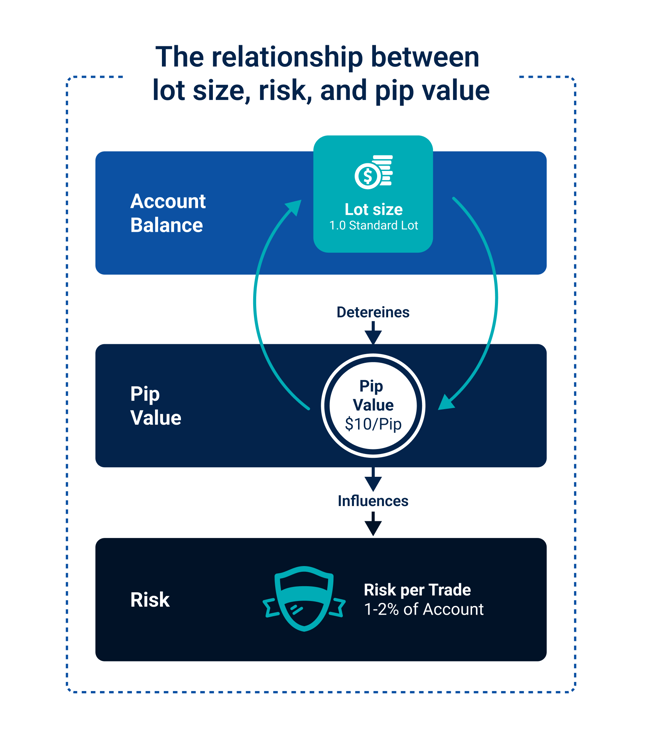
How lot size, pip value, and risk are connected
1. Lot size determines your pip value
Your chosen lot size controls how much each point (or pip) is worth.
- Larger lot sizes = higher pip value
- Smaller lot sizes = lower pip value
Even if the market moves by the same number of pips, the financial impact will differ depending on your lot size.
2. Pip value influences risk per trade
Once your pip value is set, your risk depends on how far the market moves against your position.
Many traders choose to risk a defined portion of their account on each trade, often around 1–2% of their account balance. Adjusting lot size allows you to align your pip value with that risk limit.
3. Account balance provides the framework
Your account balance helps determine what lot size is appropriate. As your balance changes, the same lot size may represent a different level of risk, which is why lot sizing is often adjusted over time.
In simple terms:
- Account balance sets the context
- Lot size controls exposure
- Pip value translates price movement into profit or loss
- Risk is managed by balancing all three
Indices
When spreadbetting on indices, a lot usually represents a fixed monetary exposure per point of price movement. For example, one lot on an index may equal a defined stake per index point, rather than a number of underlying shares. This makes index spread betting straightforward, as profits and losses are calculated directly from the points moved multiplied by your lot size.
Commodities
In commodity markets such as oil, gold, or natural gas, lot sizes are based on contract specifications tied to the underlying market. A single lot represents a standardised quantity of the commodity, allowing traders to gain exposure to price movements without owning the physical asset. Minimum lot sizes are set to balance accessibility with market liquidity.
Shares
When spread betting on individual shares, lot sizes typically reflect a specific stake per share price movement rather than ownership of the shares themselves. This allows traders to take a position on stocks with smaller initial outlays compared to traditional share dealing.
Why lot sizes matter
Understanding lot sizes is essential because they directly affect:
- Your market exposure
- Margin requirements
- Potential profit or loss
- Overall risk management
Larger lot sizes increase market exposure, while smaller lots allow for tighter risk management and more precise position sizing.
FXCM offers spread betting practice accounts on both Trading Station and MetaTrader 4, giving you the opportunity to familiarise yourself with lot sizes across different markets before trading with real capital.